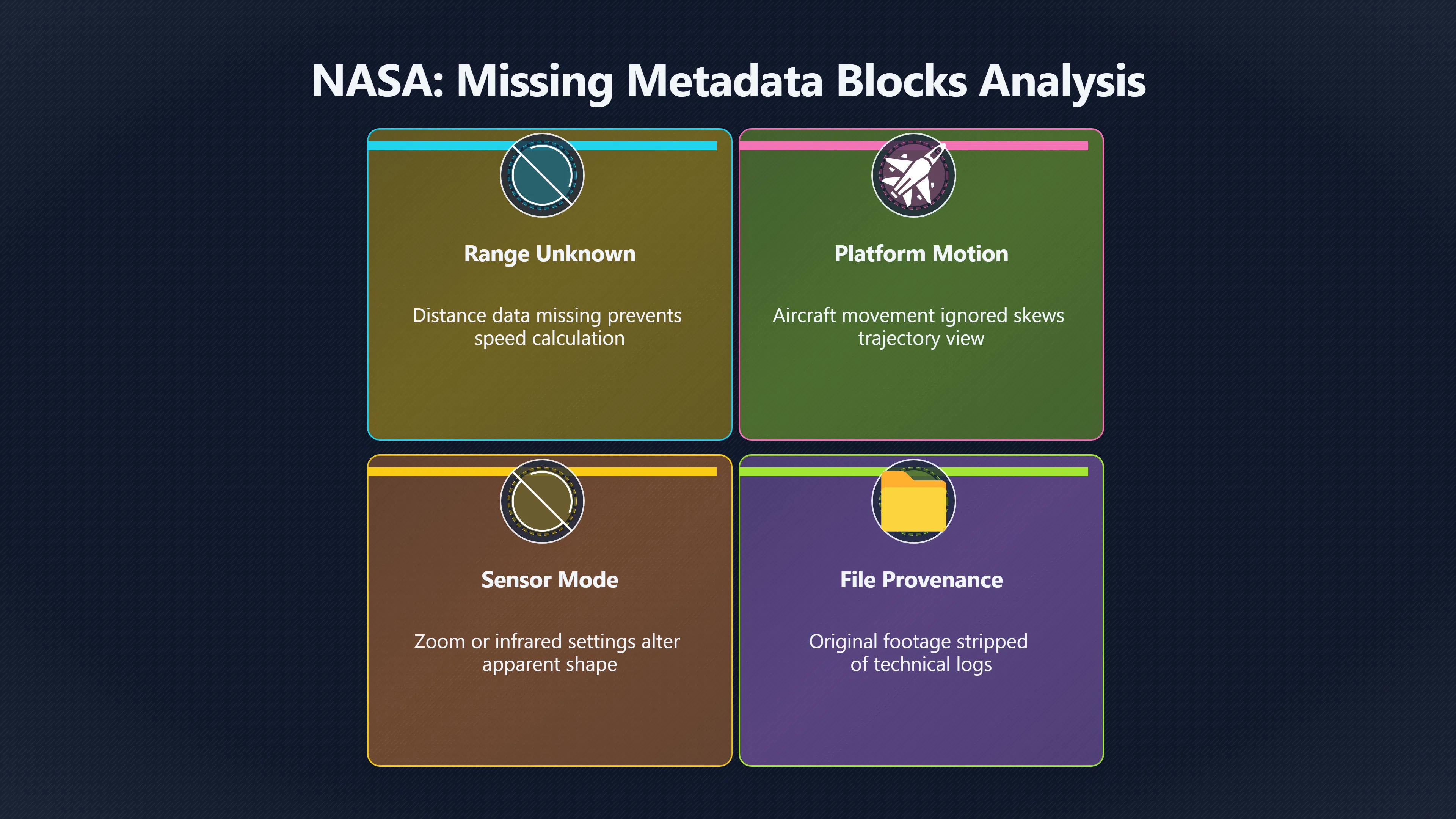
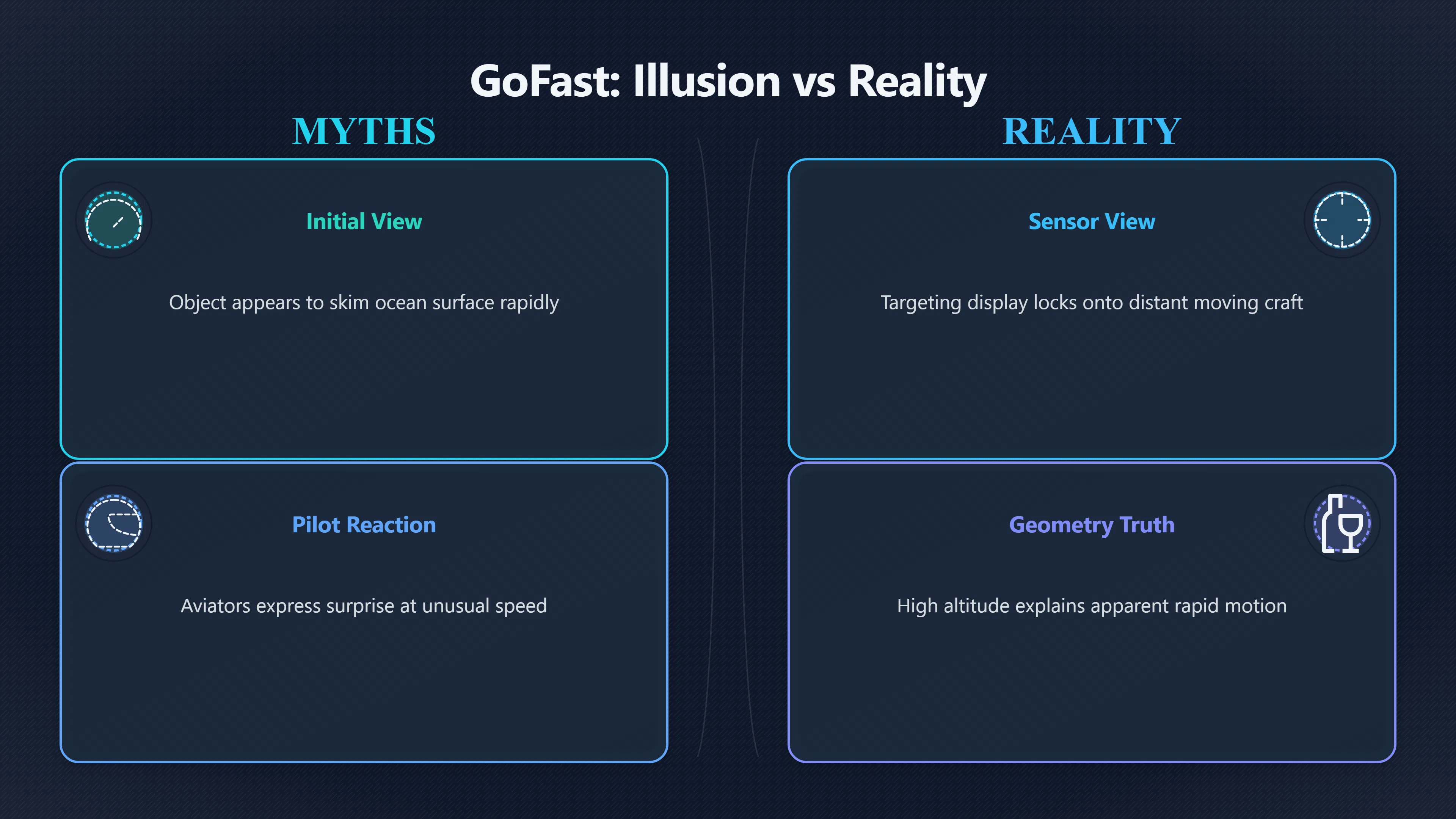
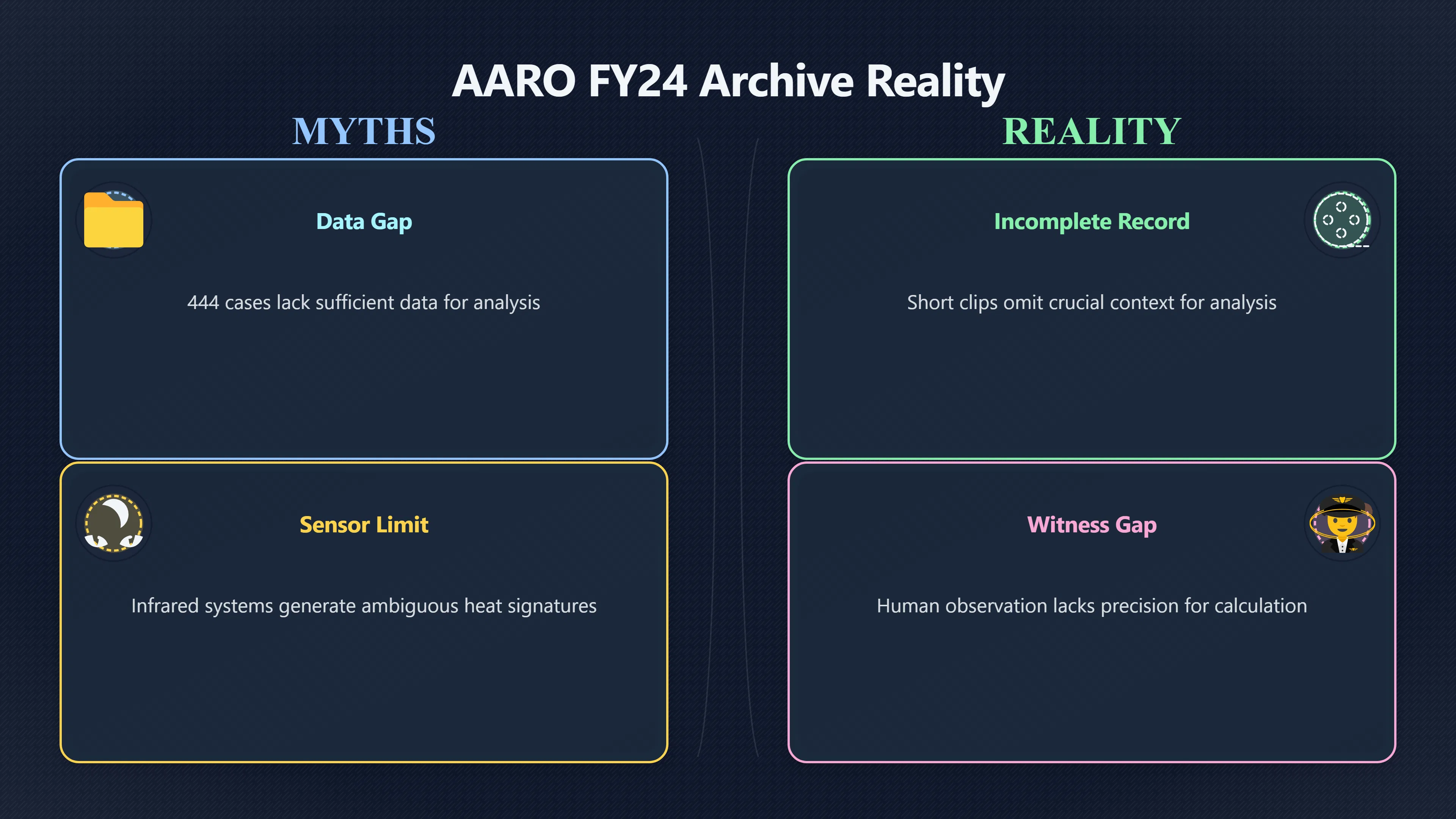
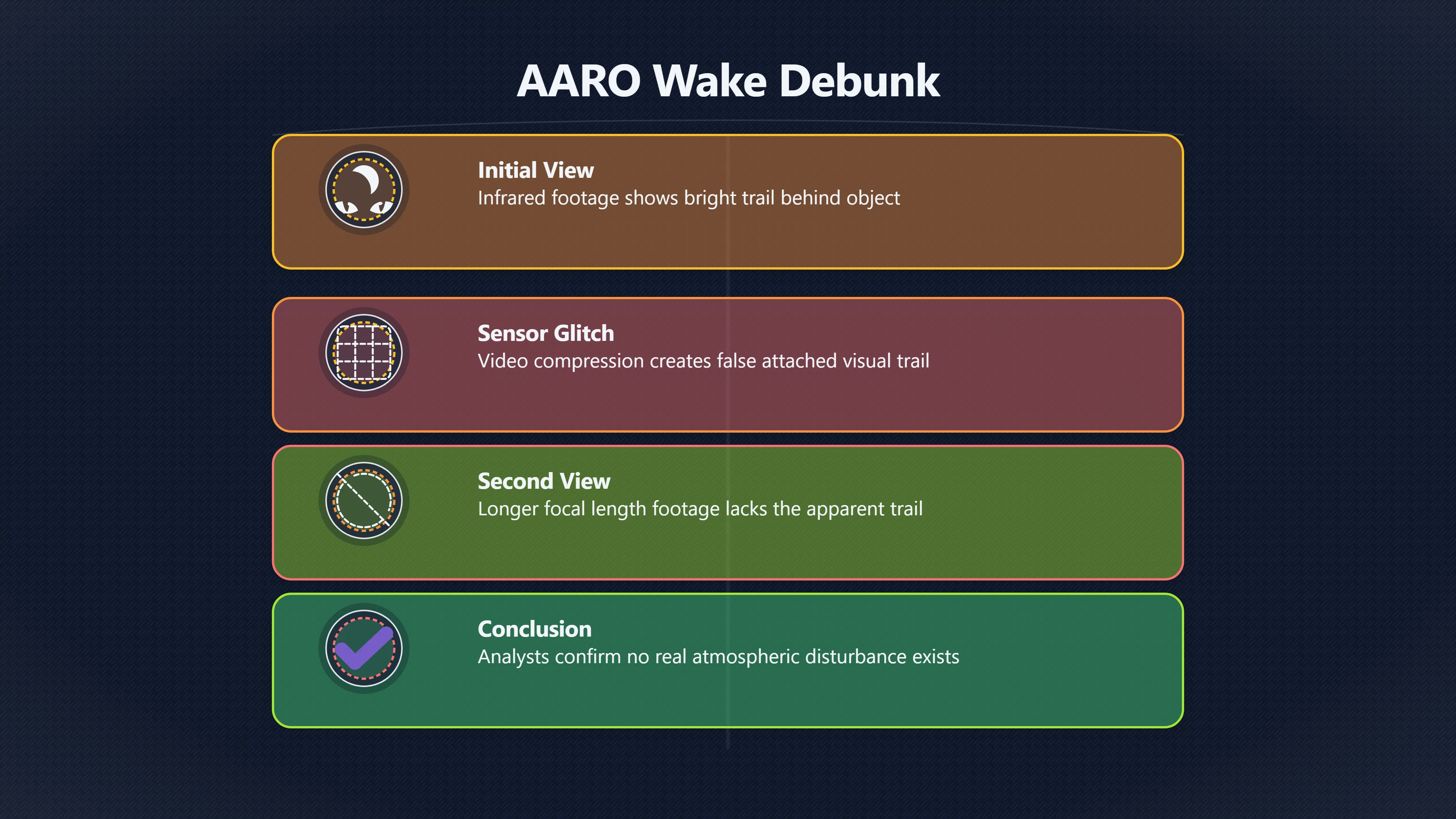
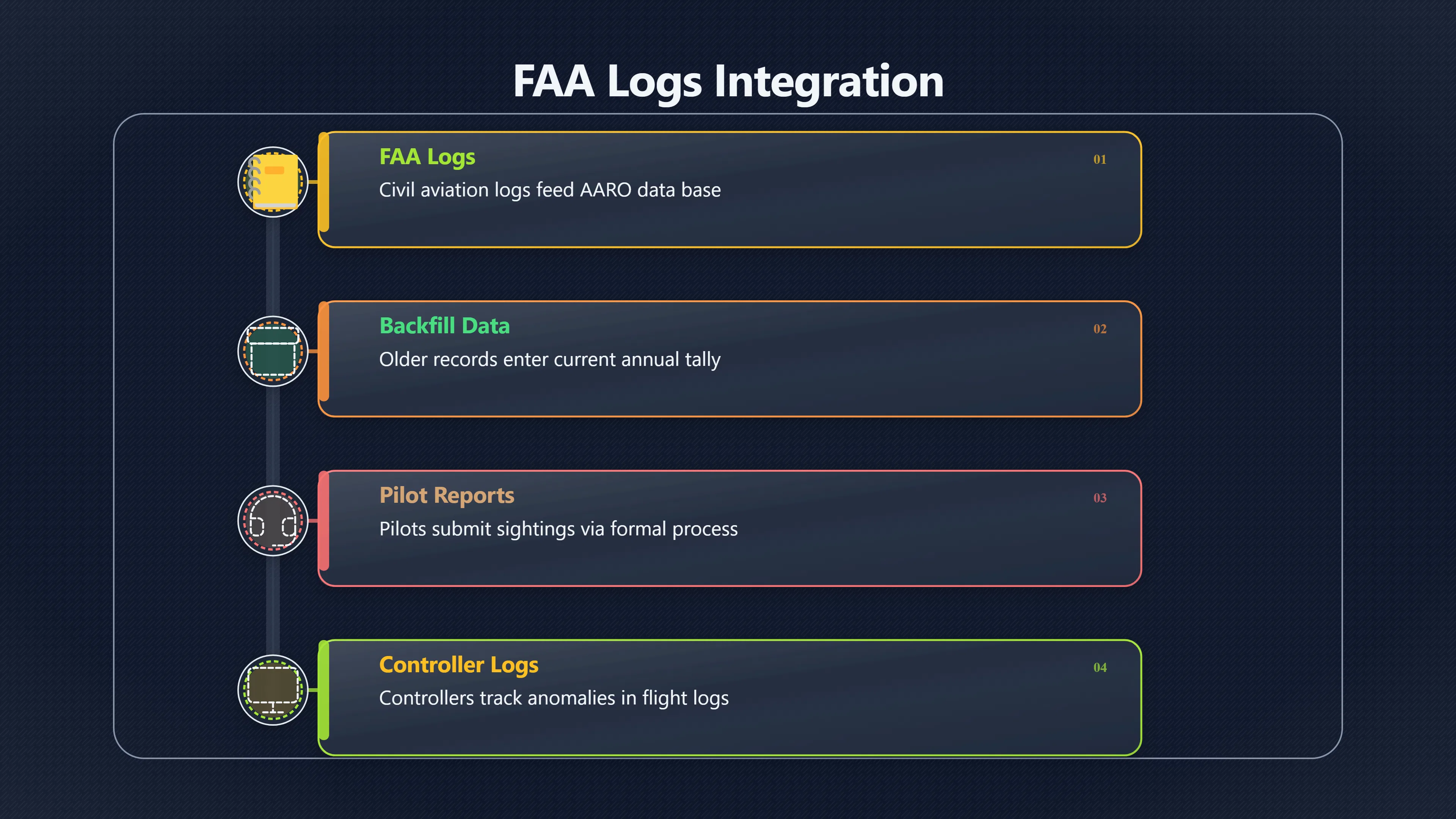
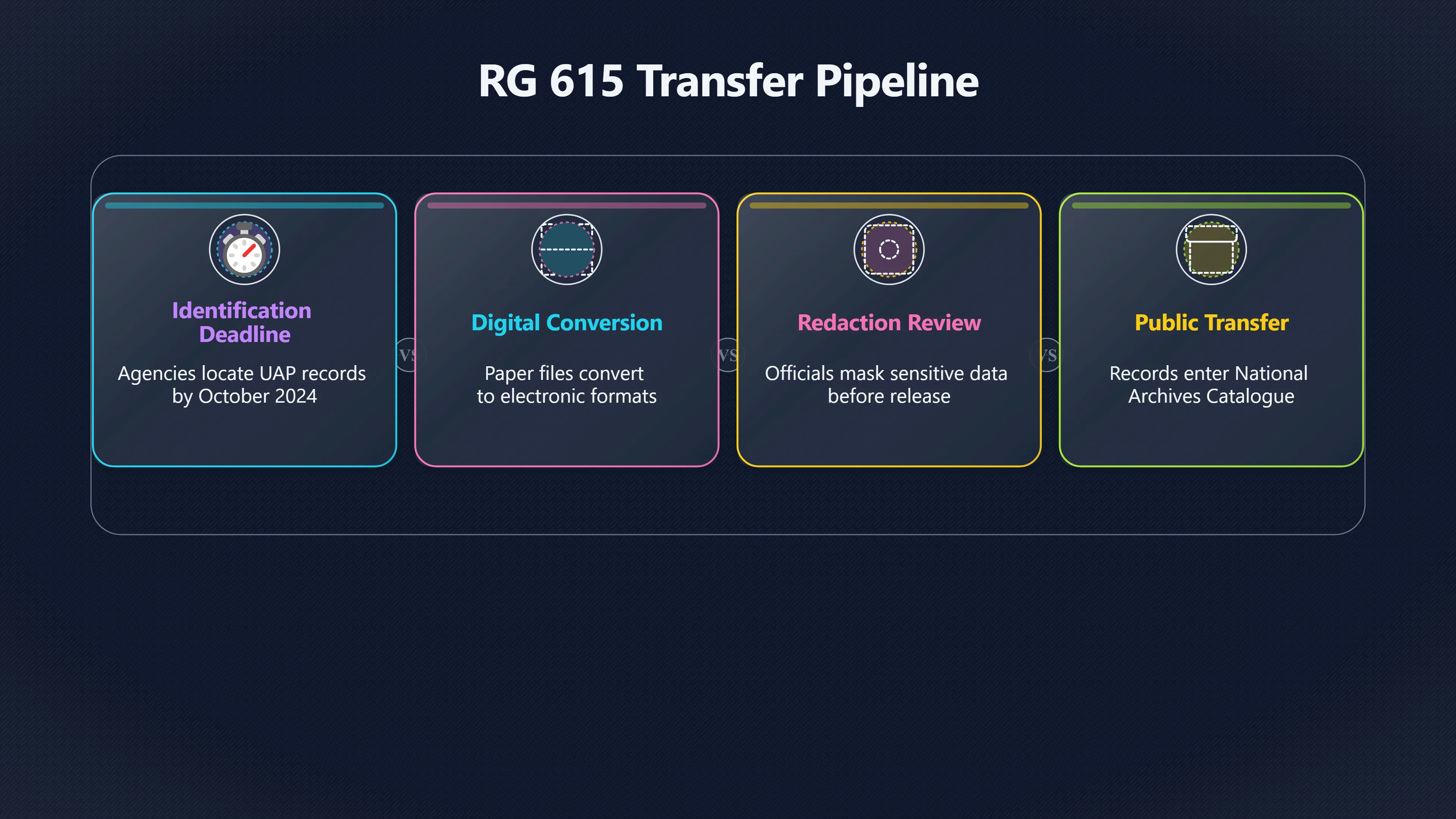
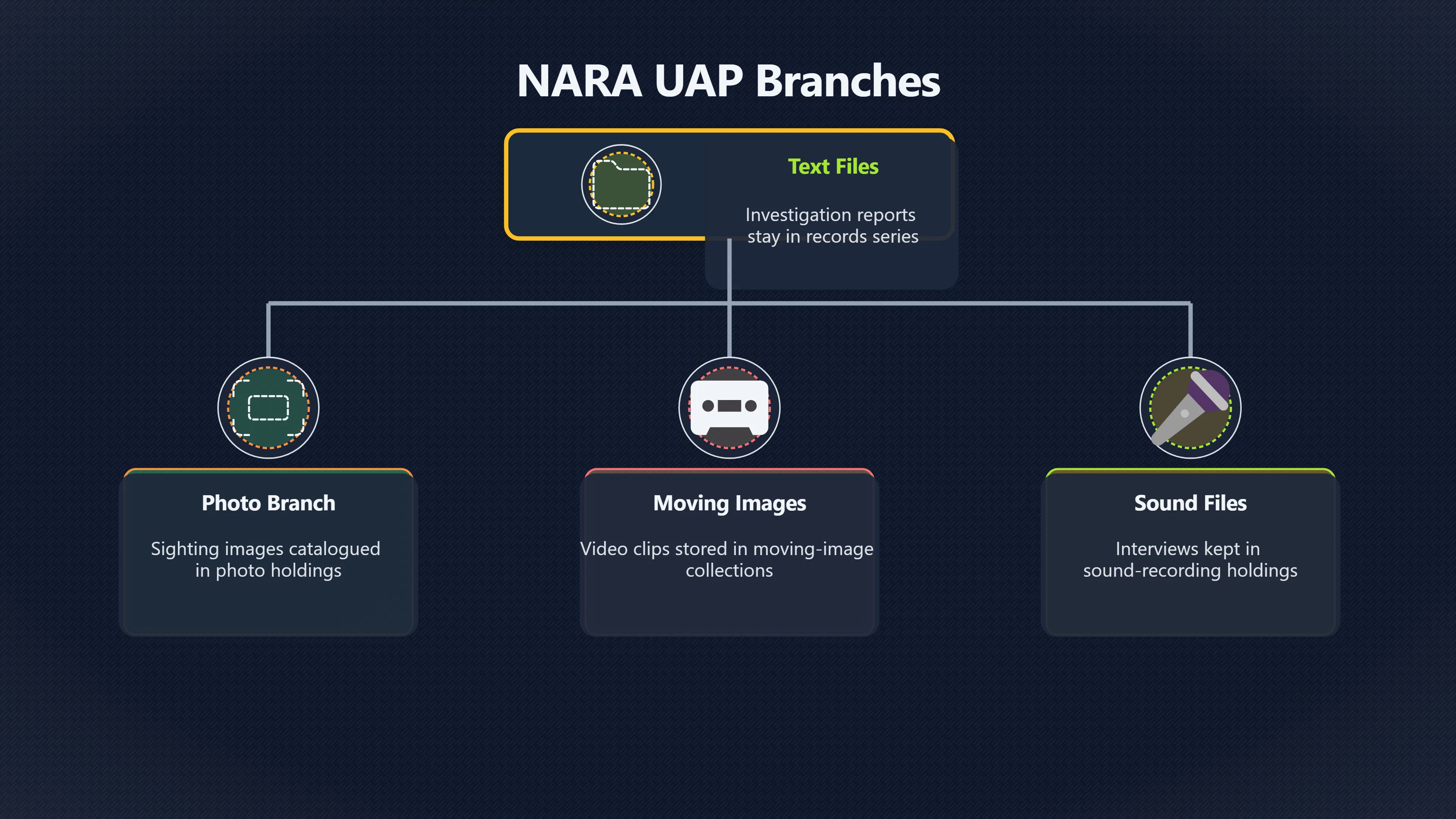
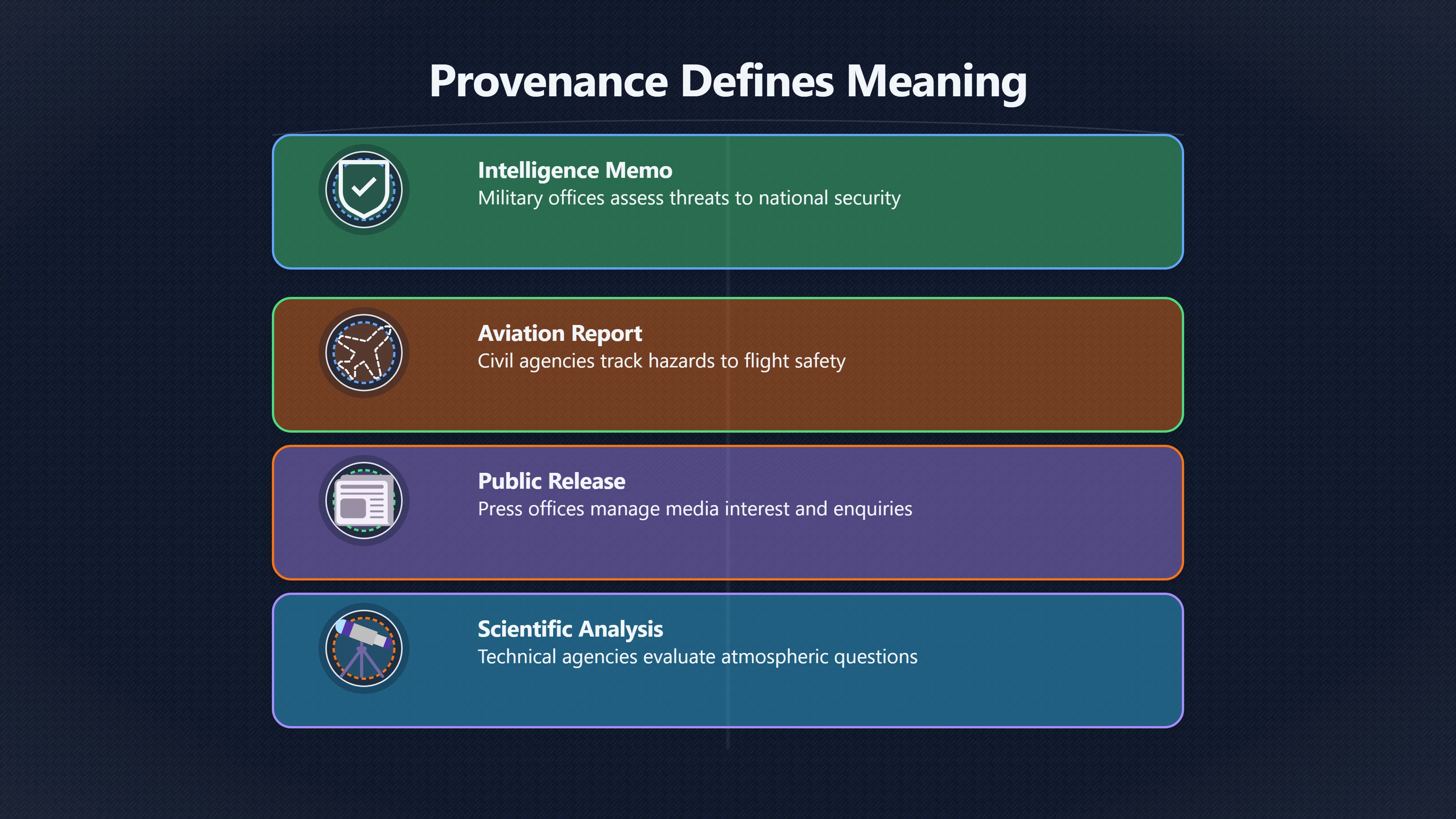
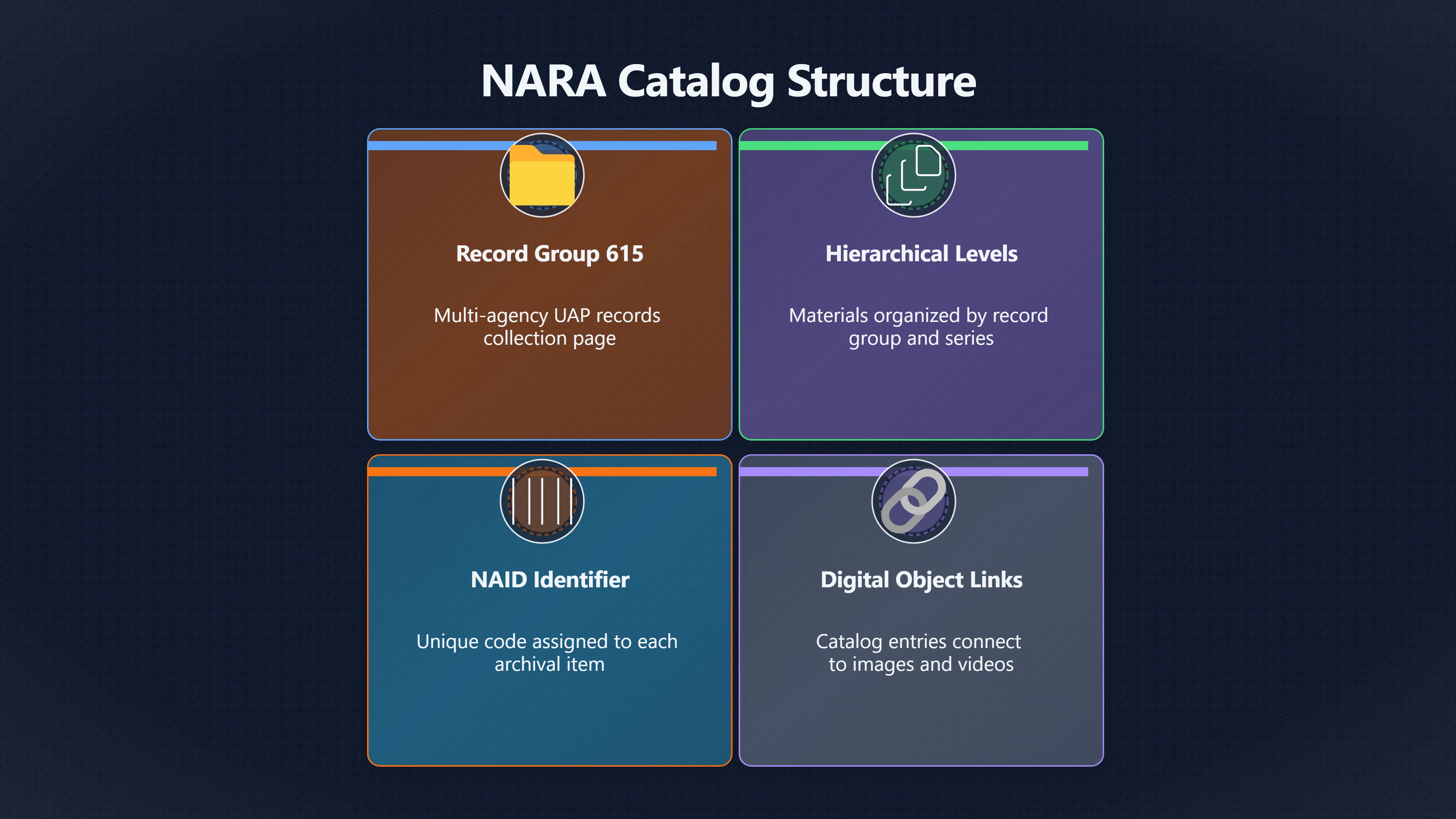
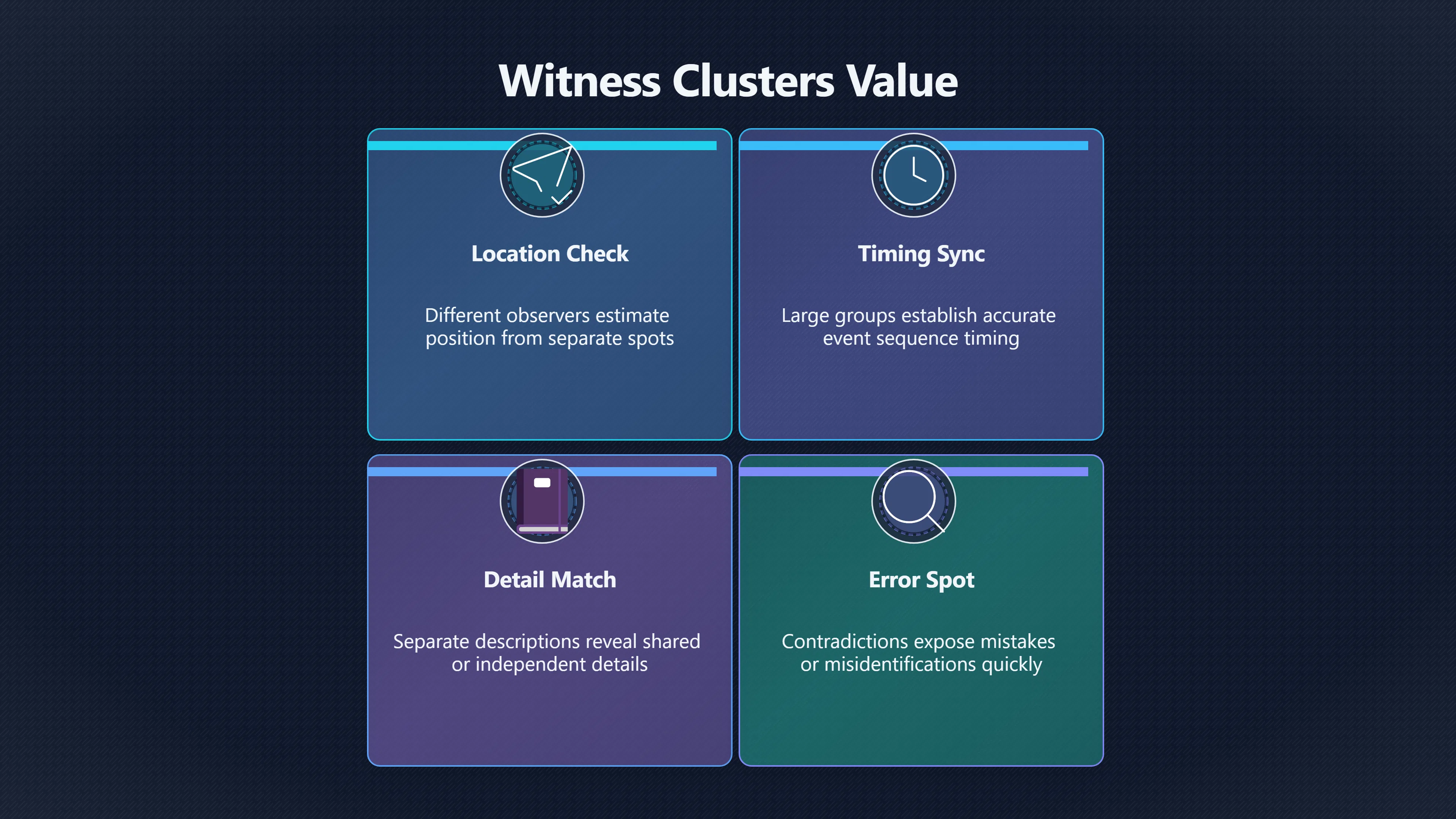
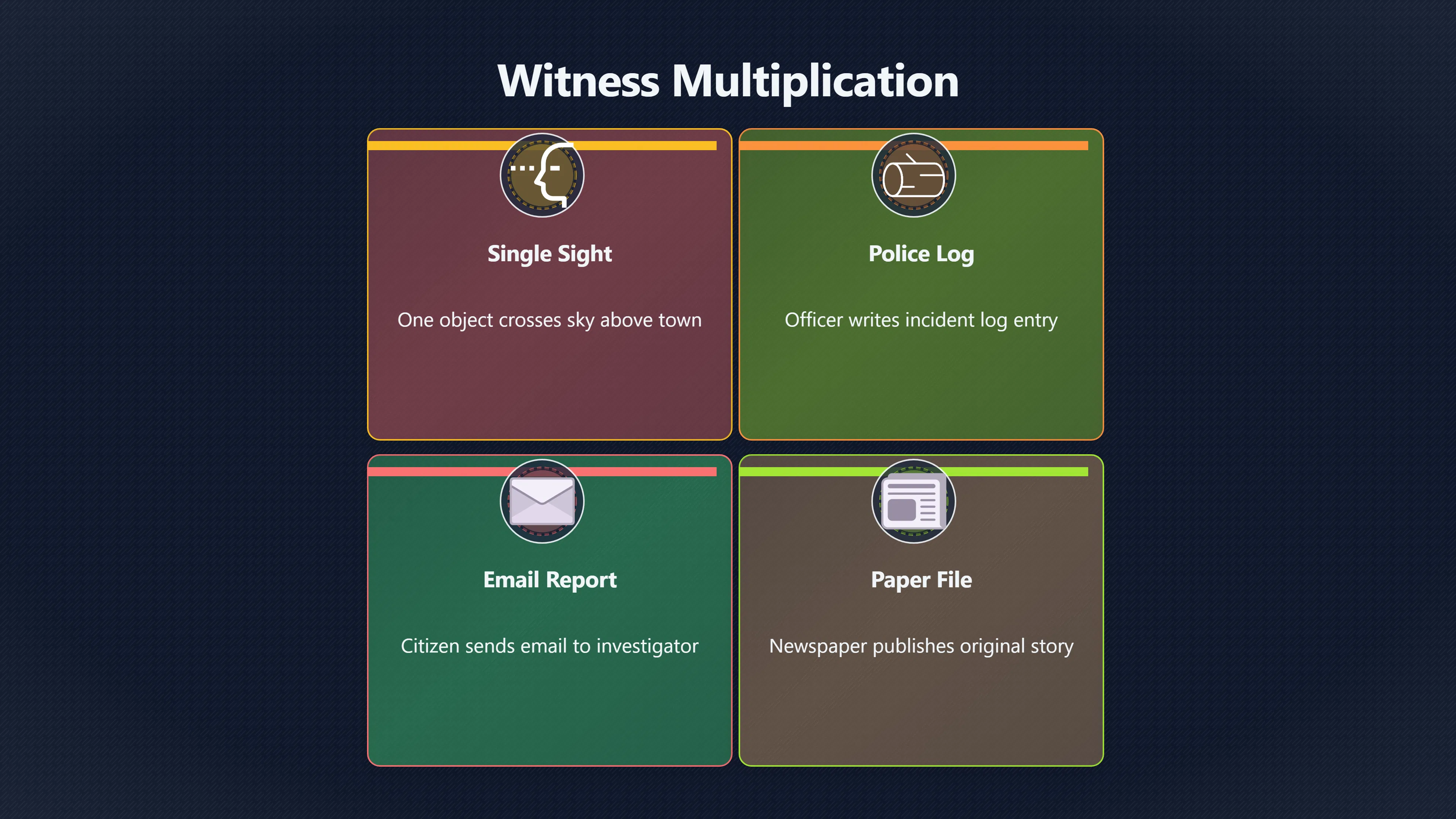
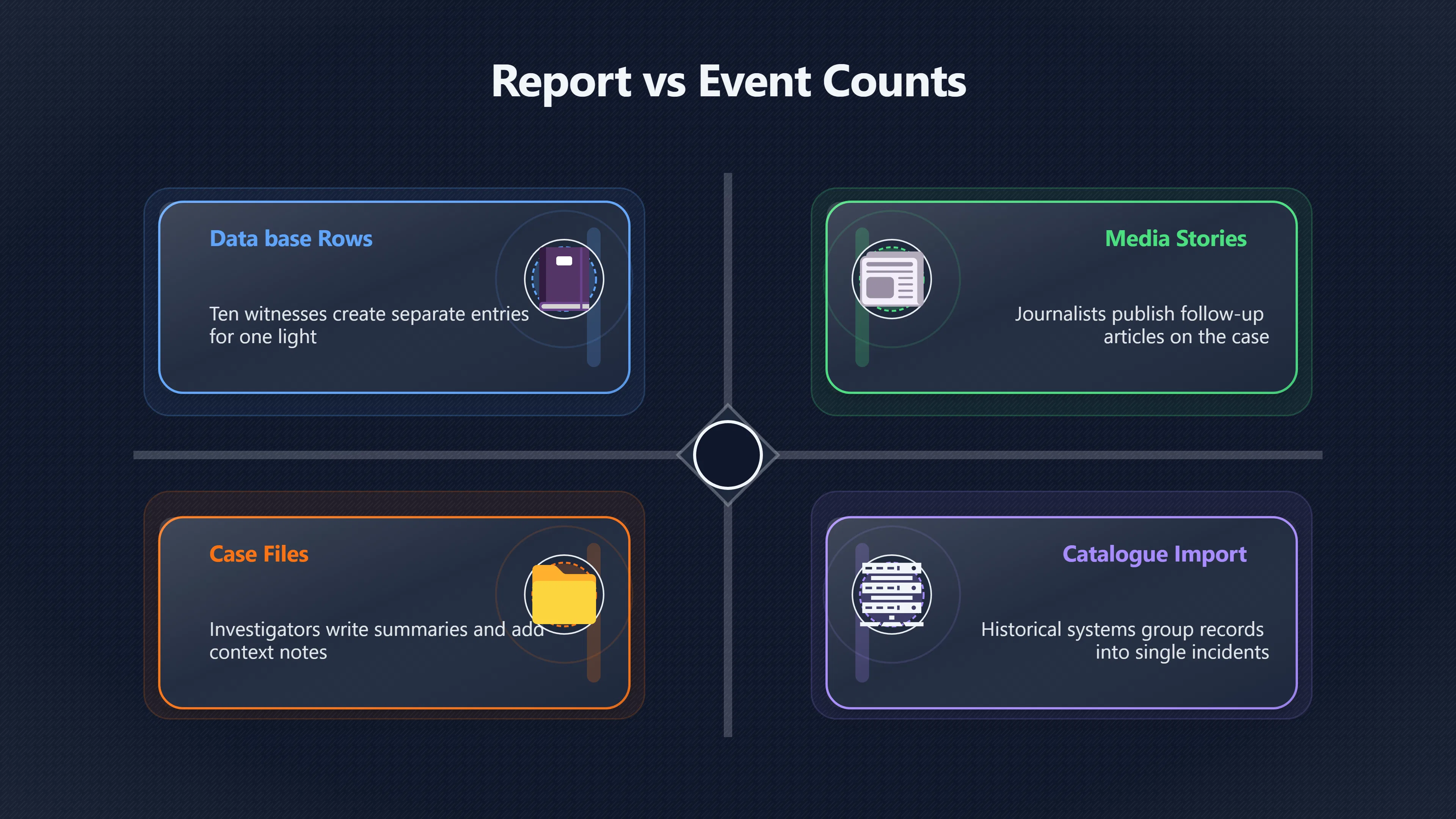
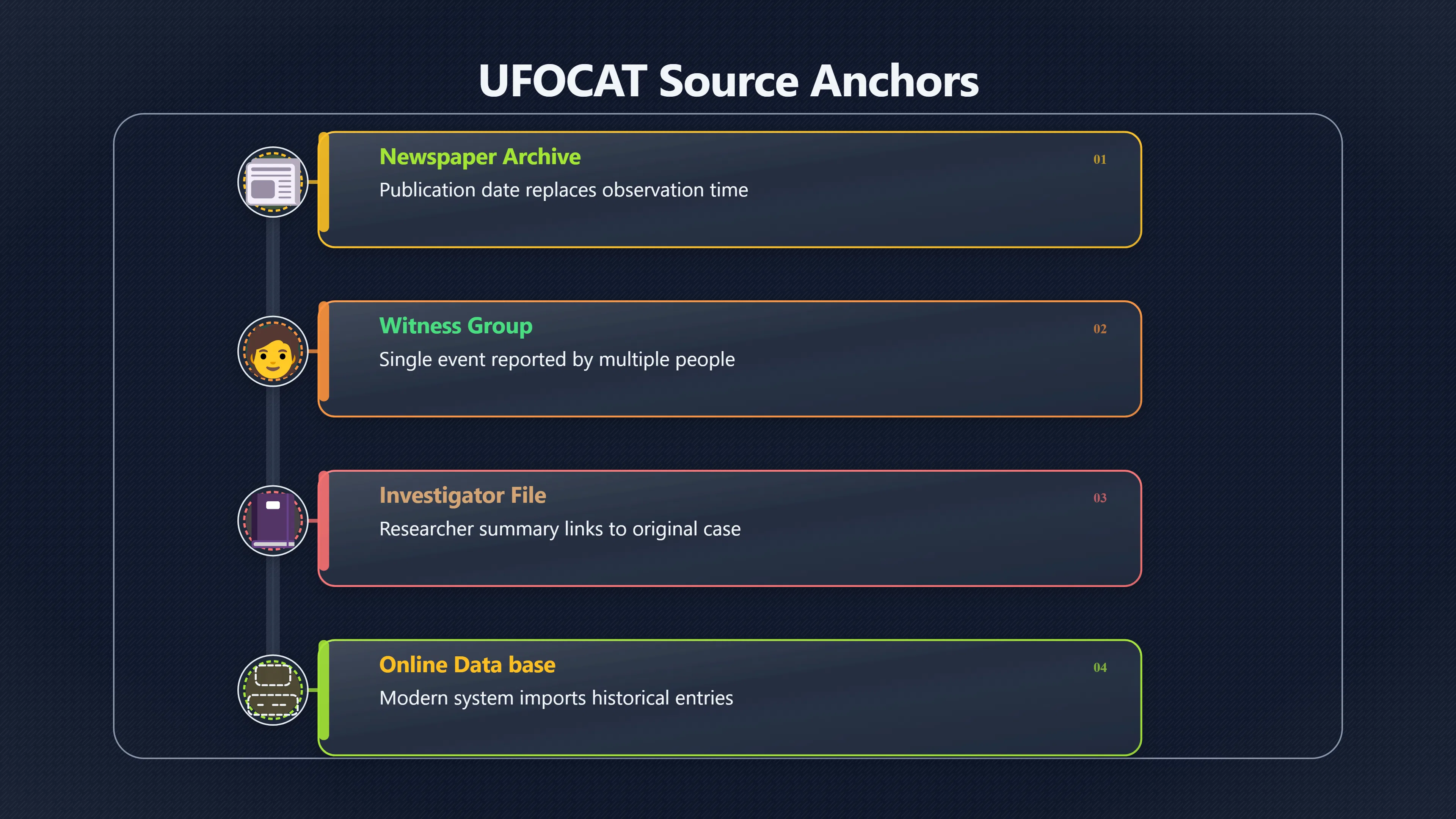
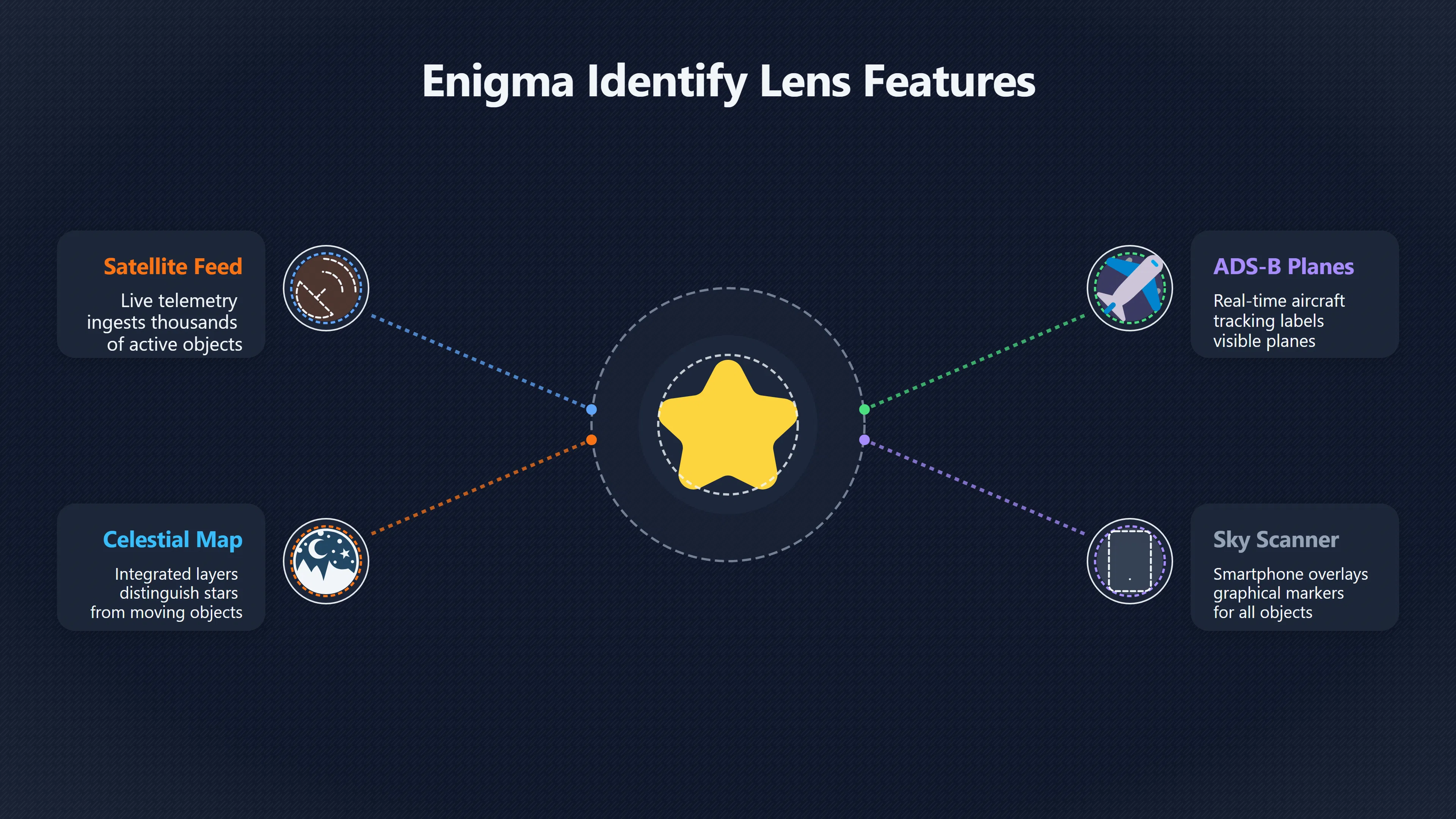
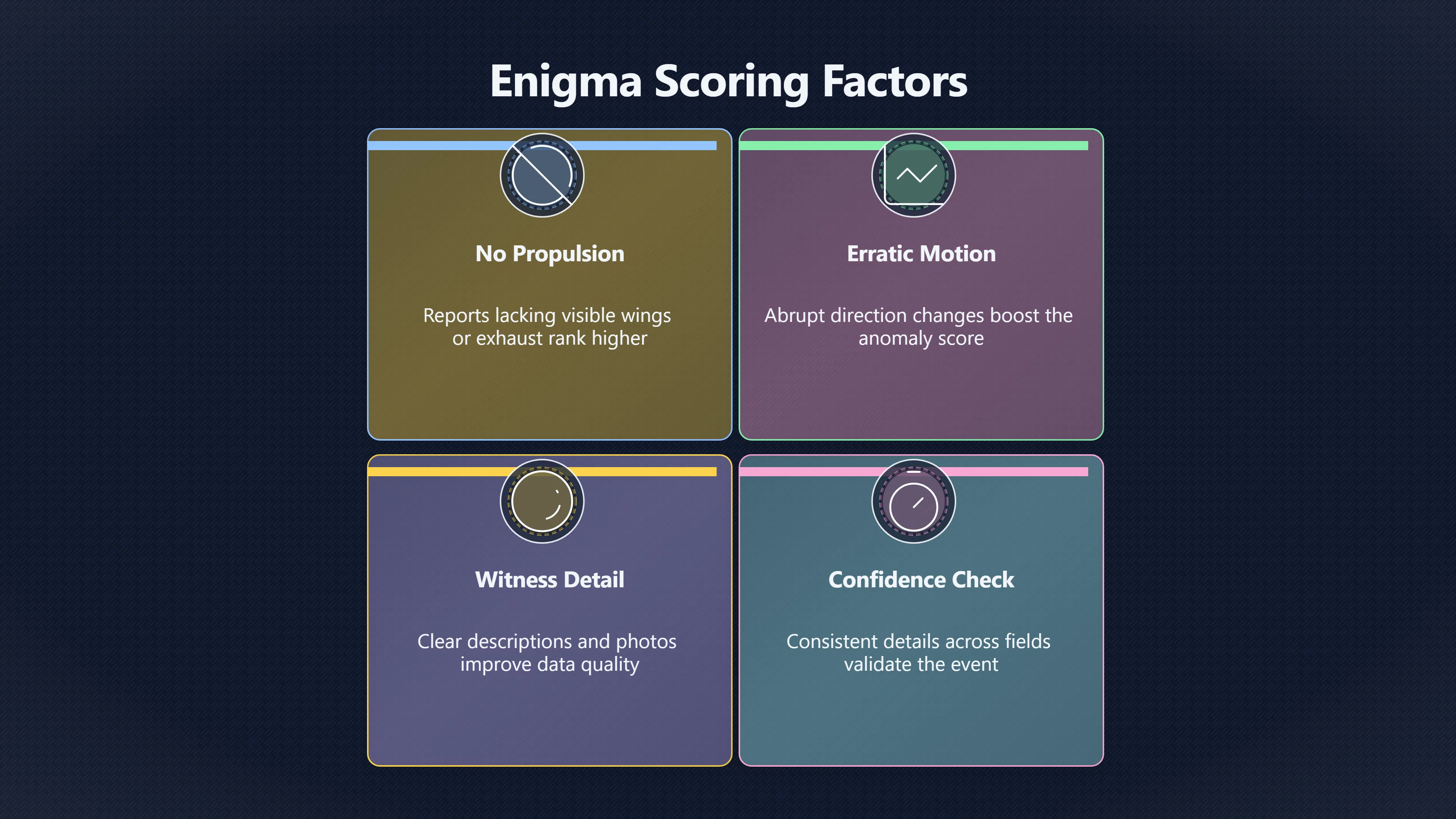
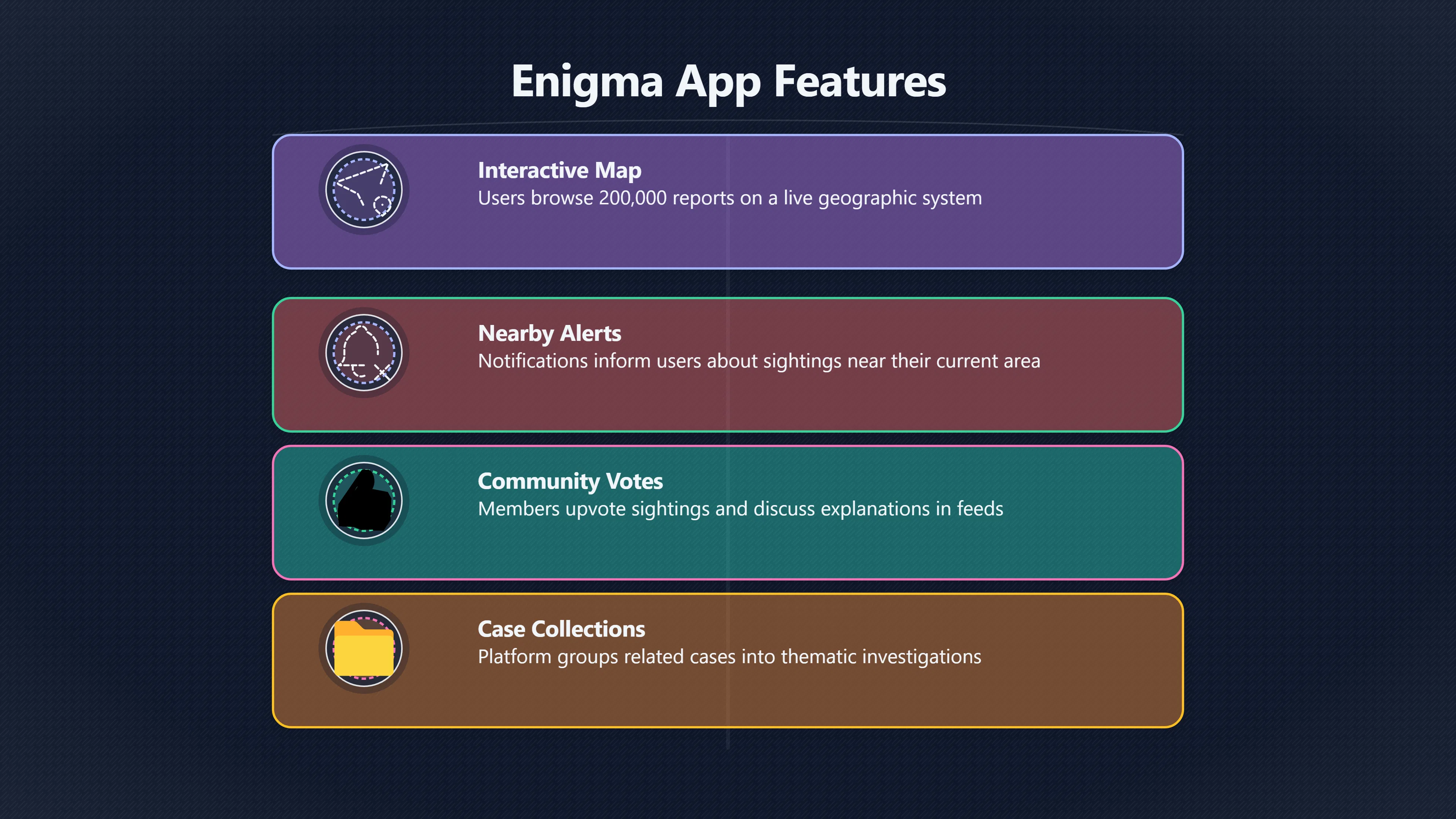
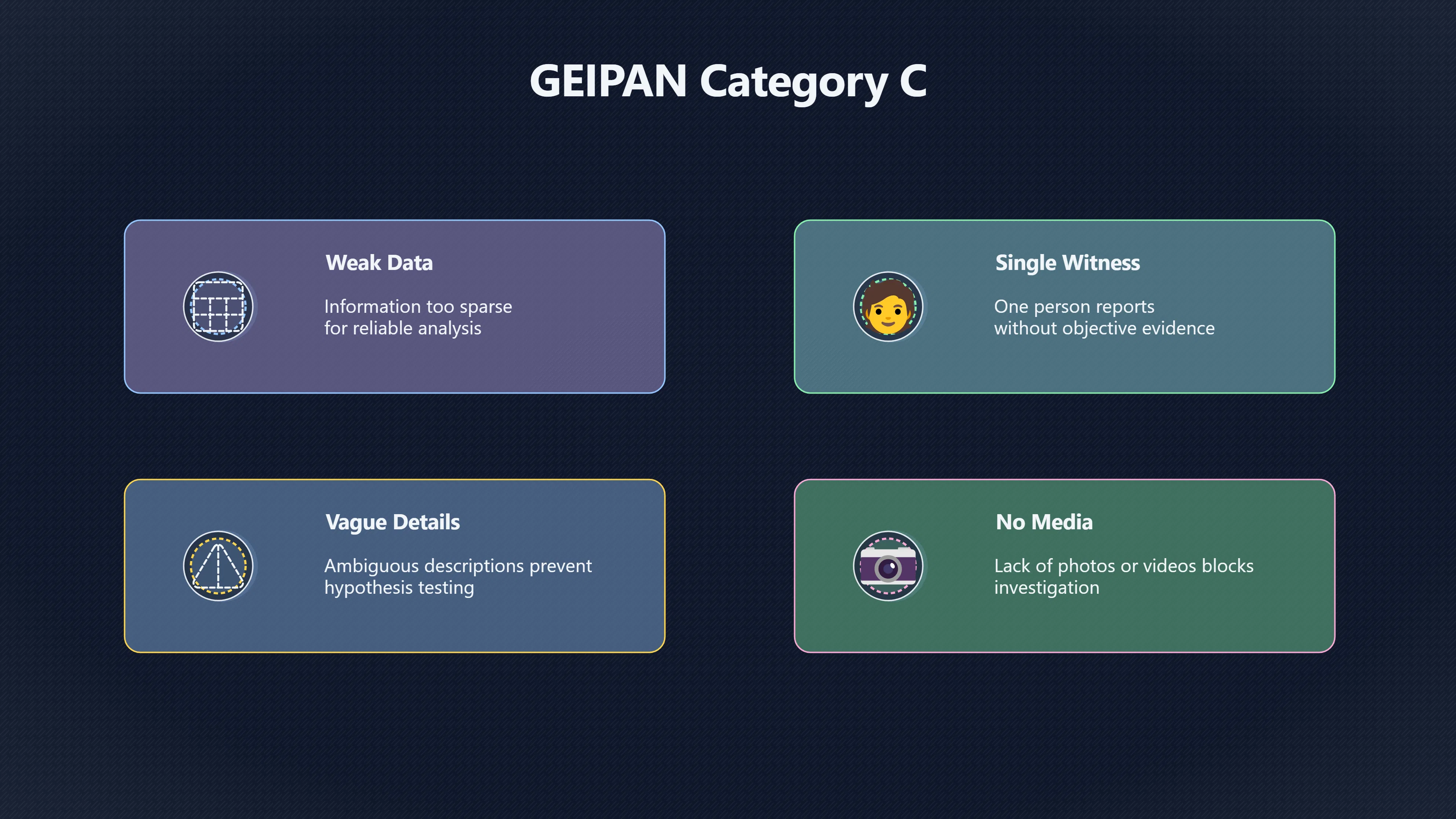
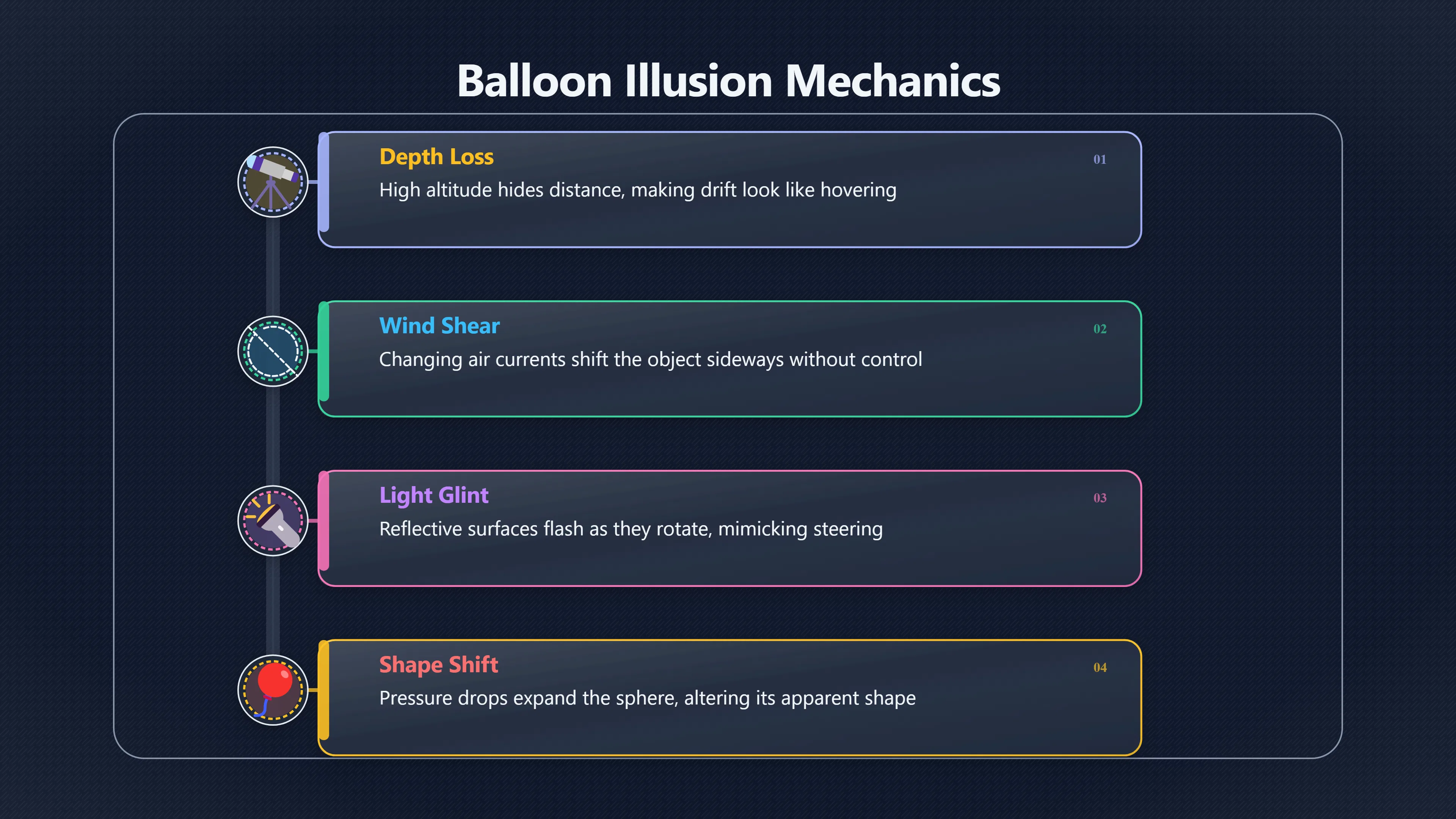
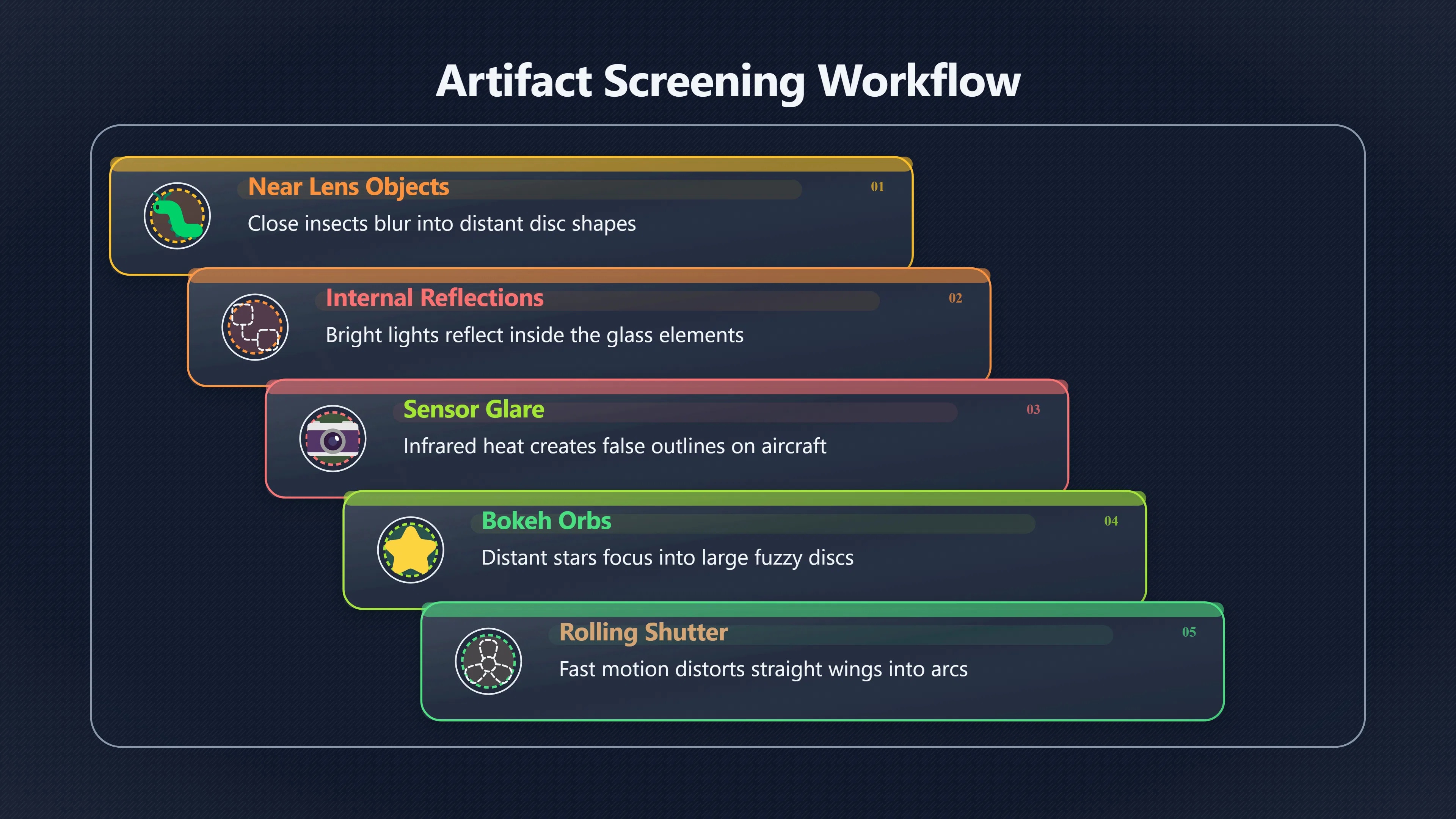
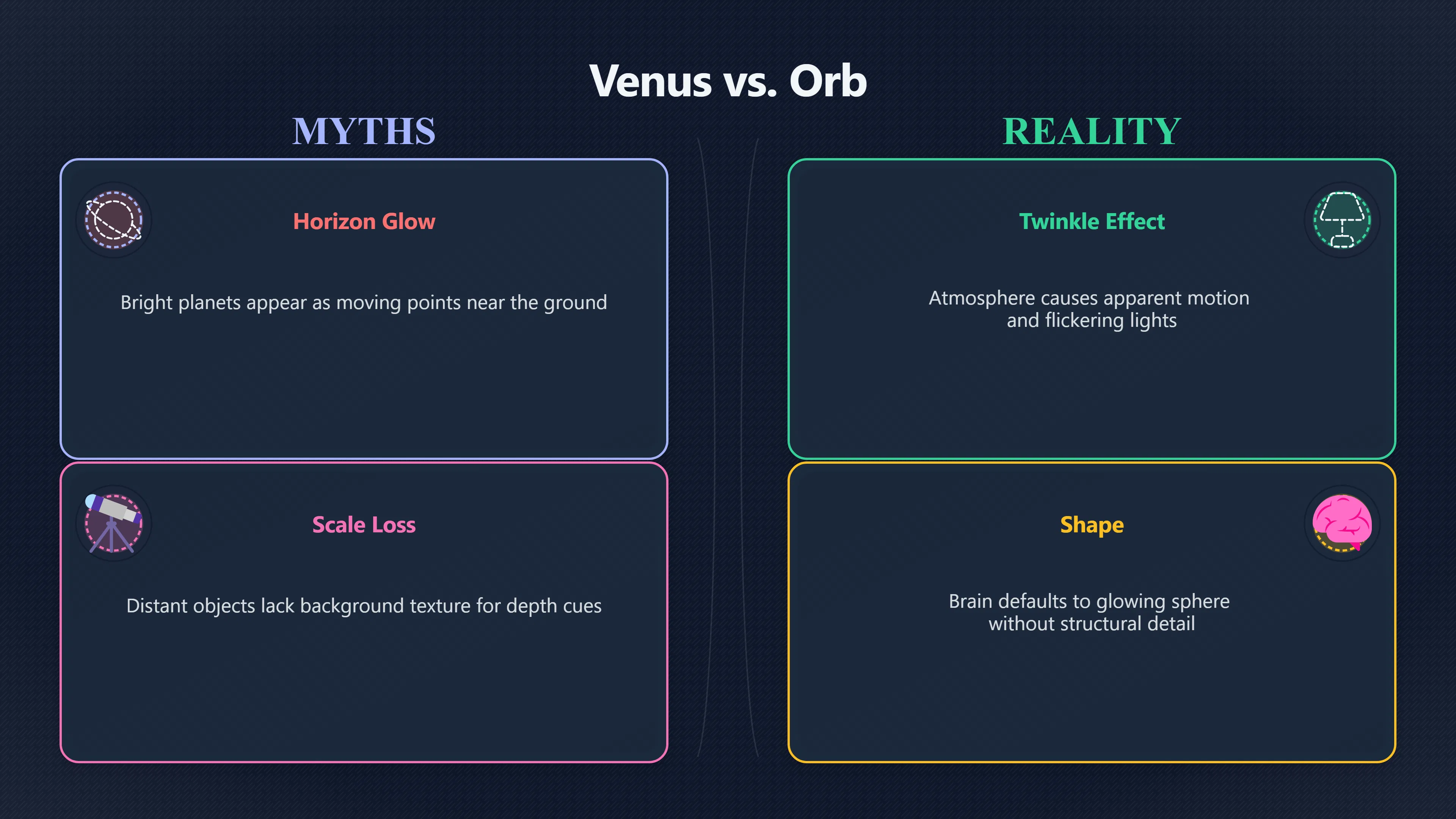
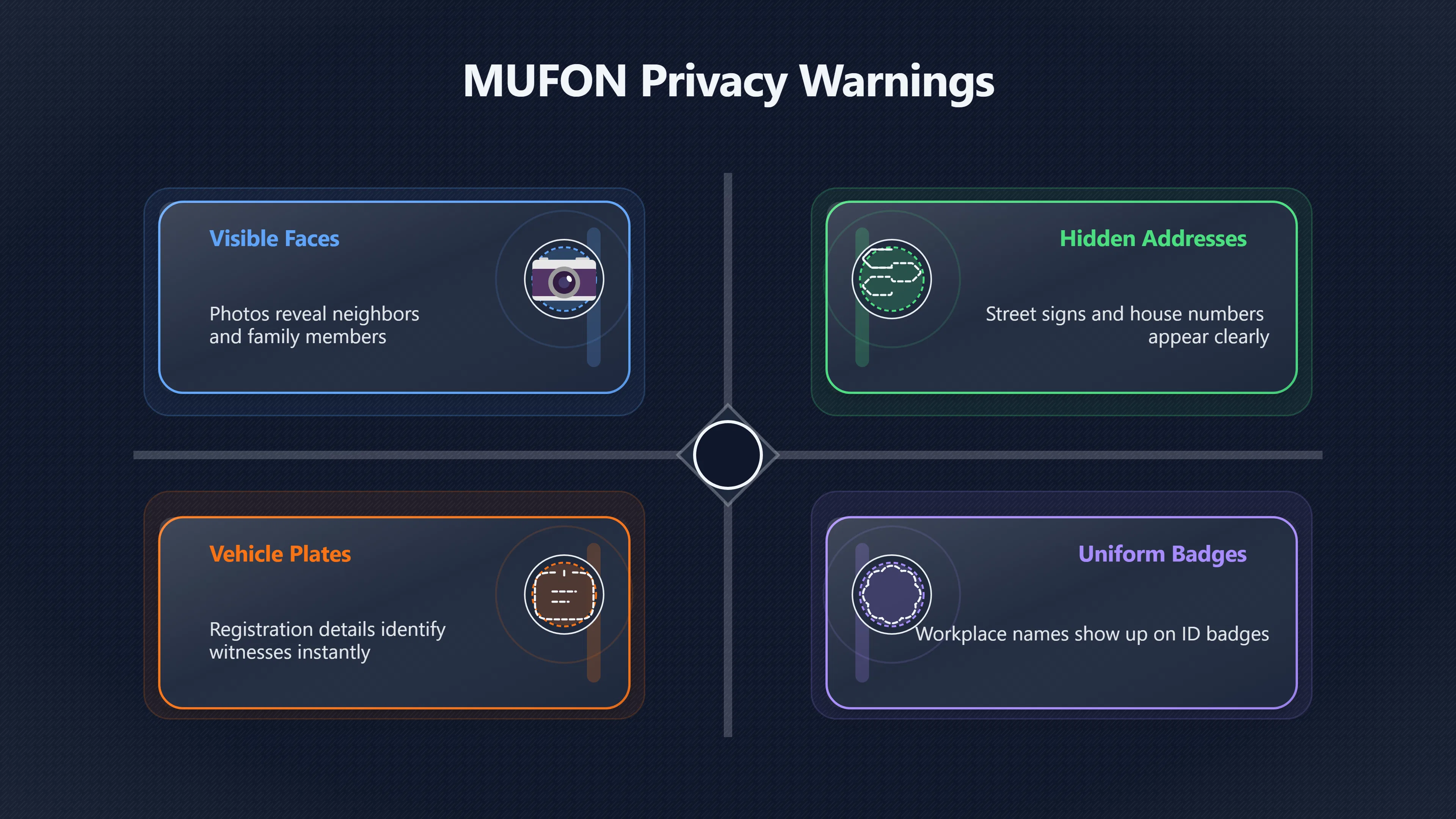
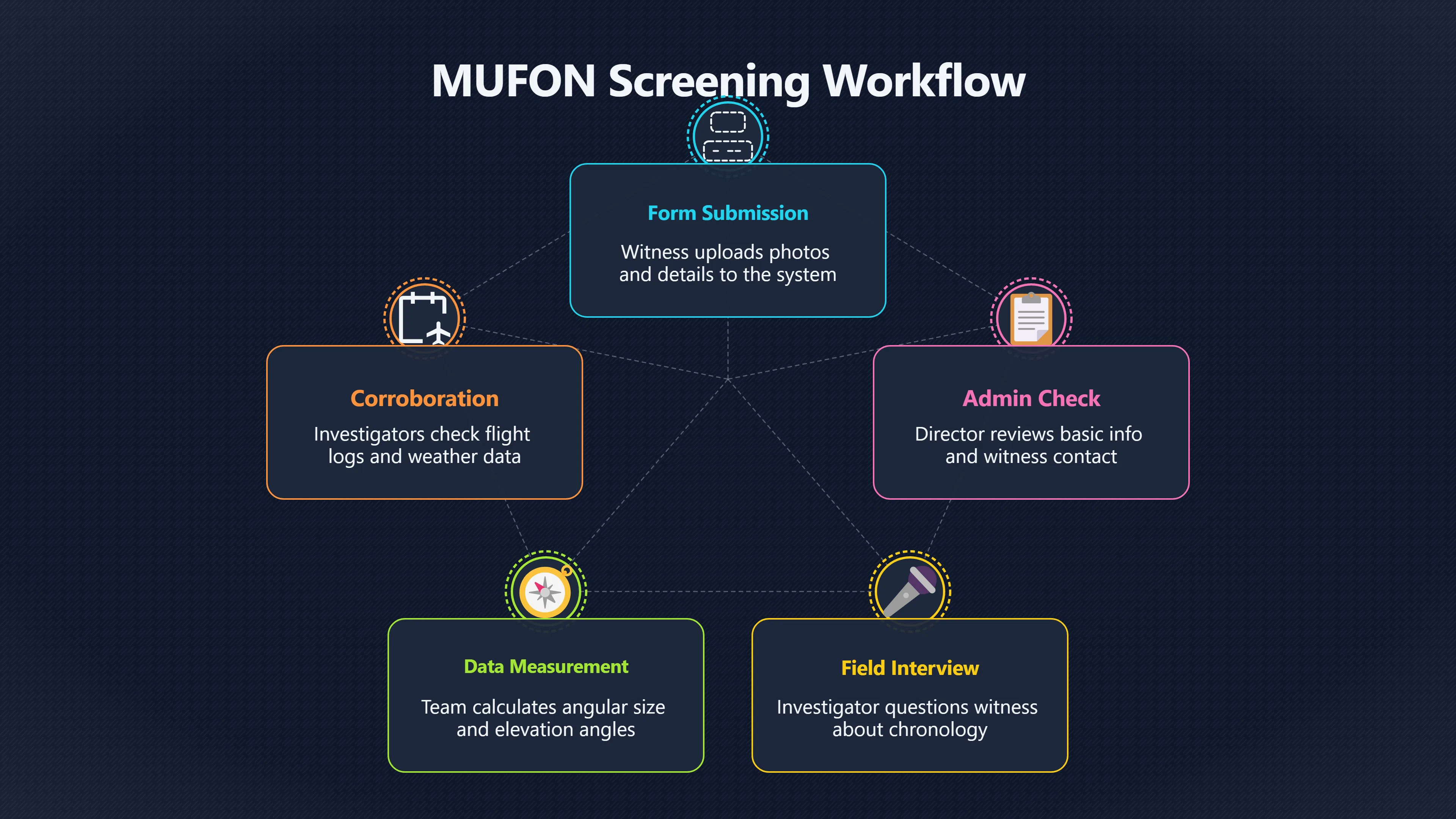
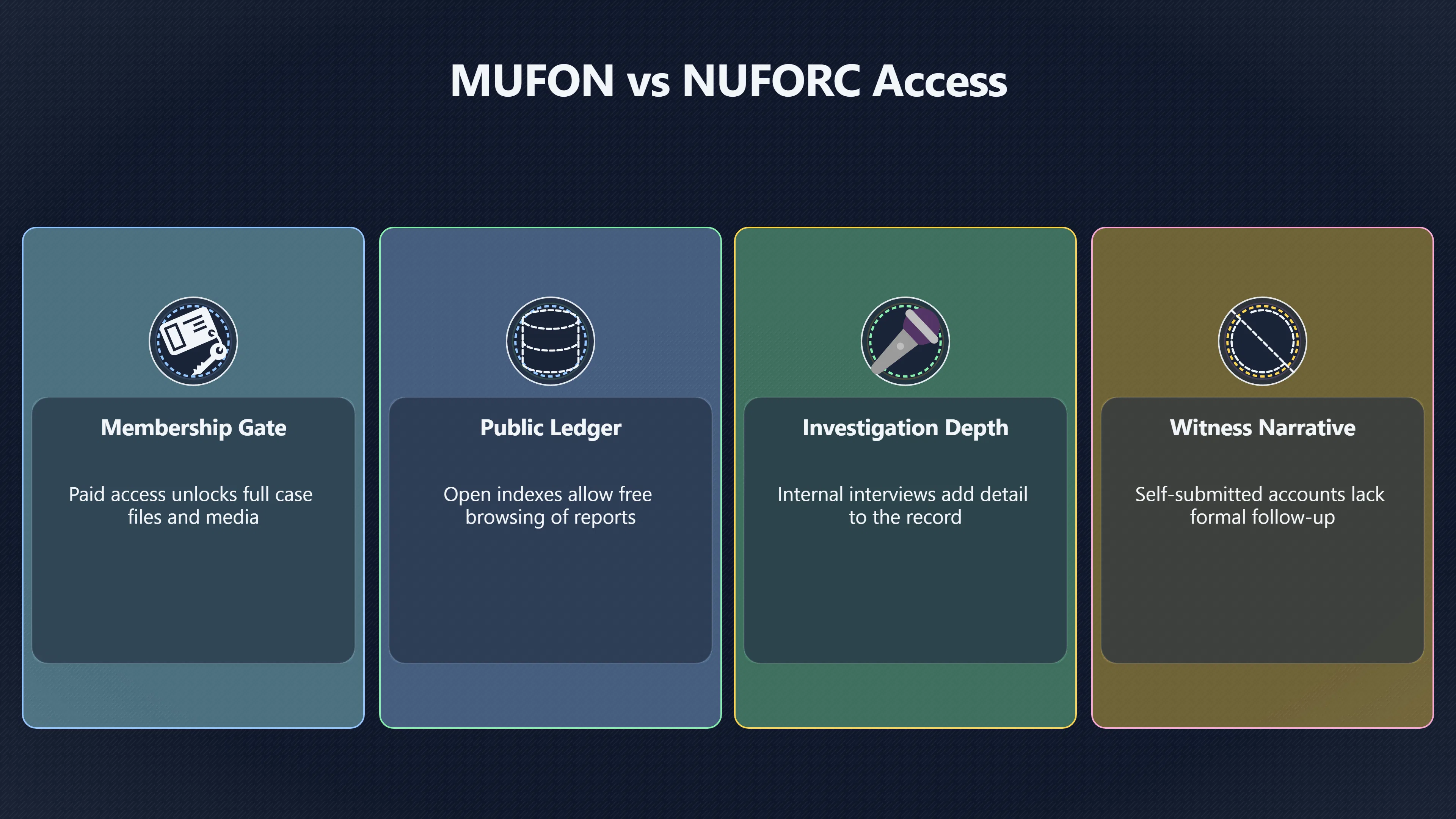
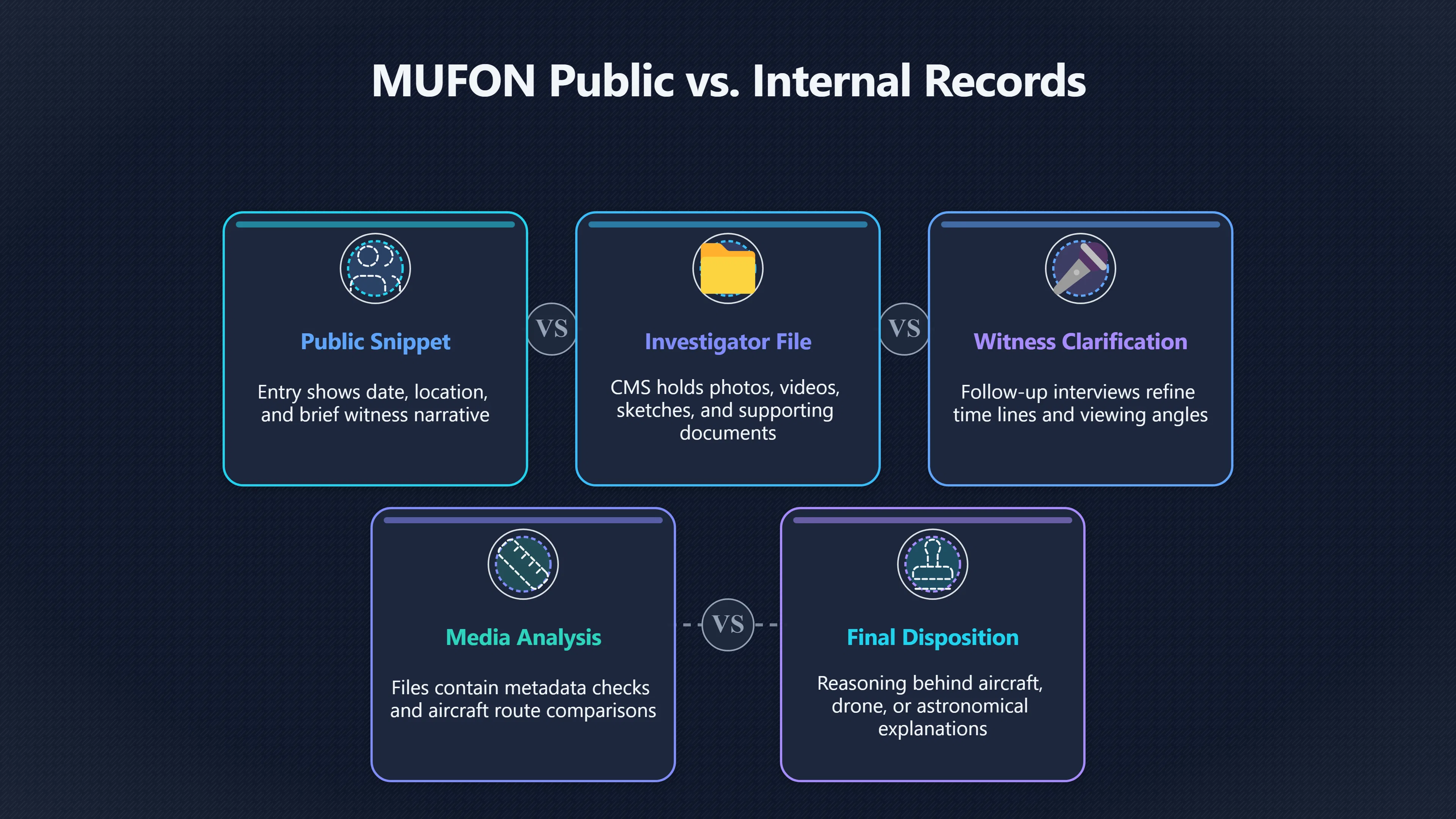
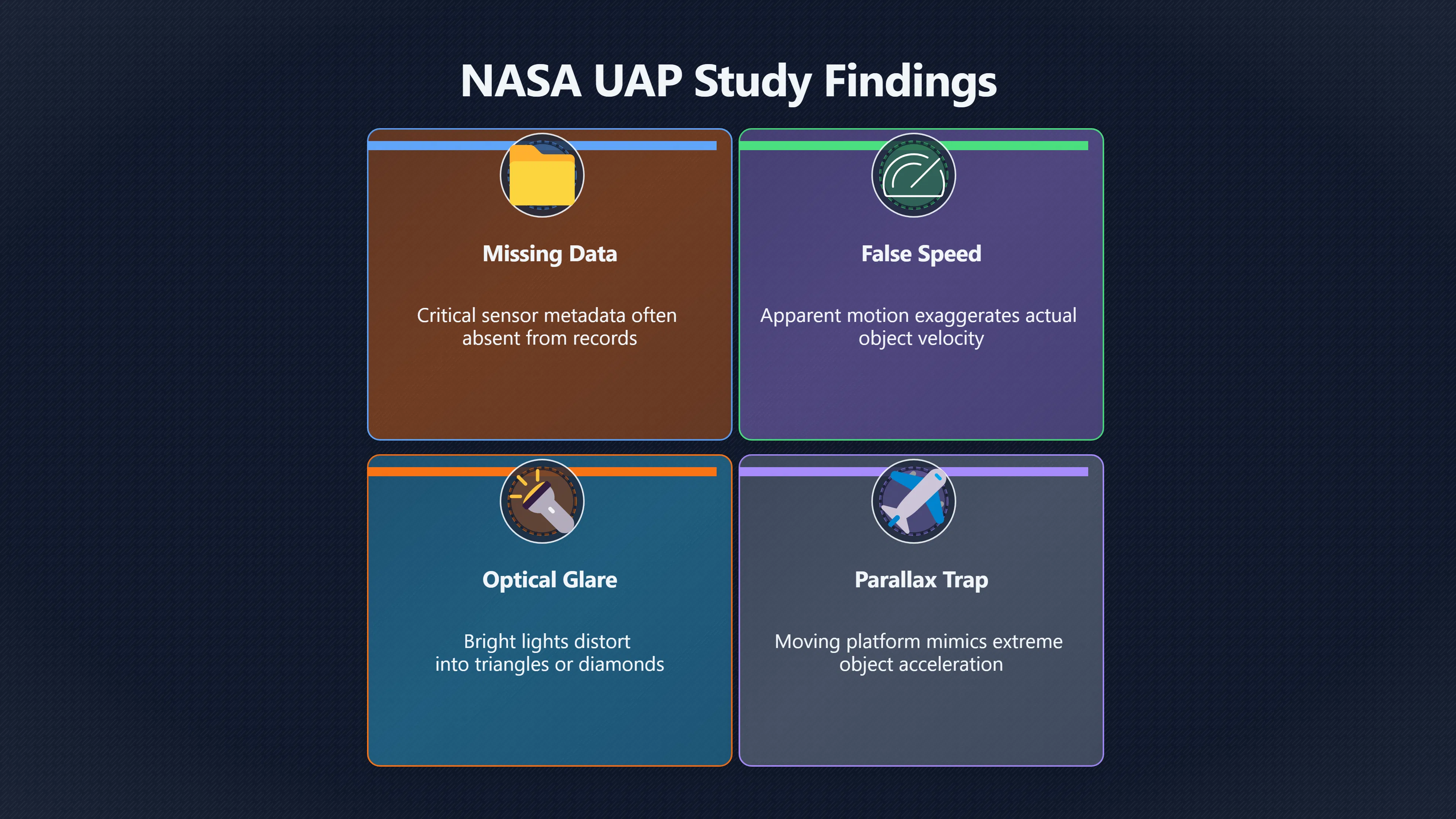
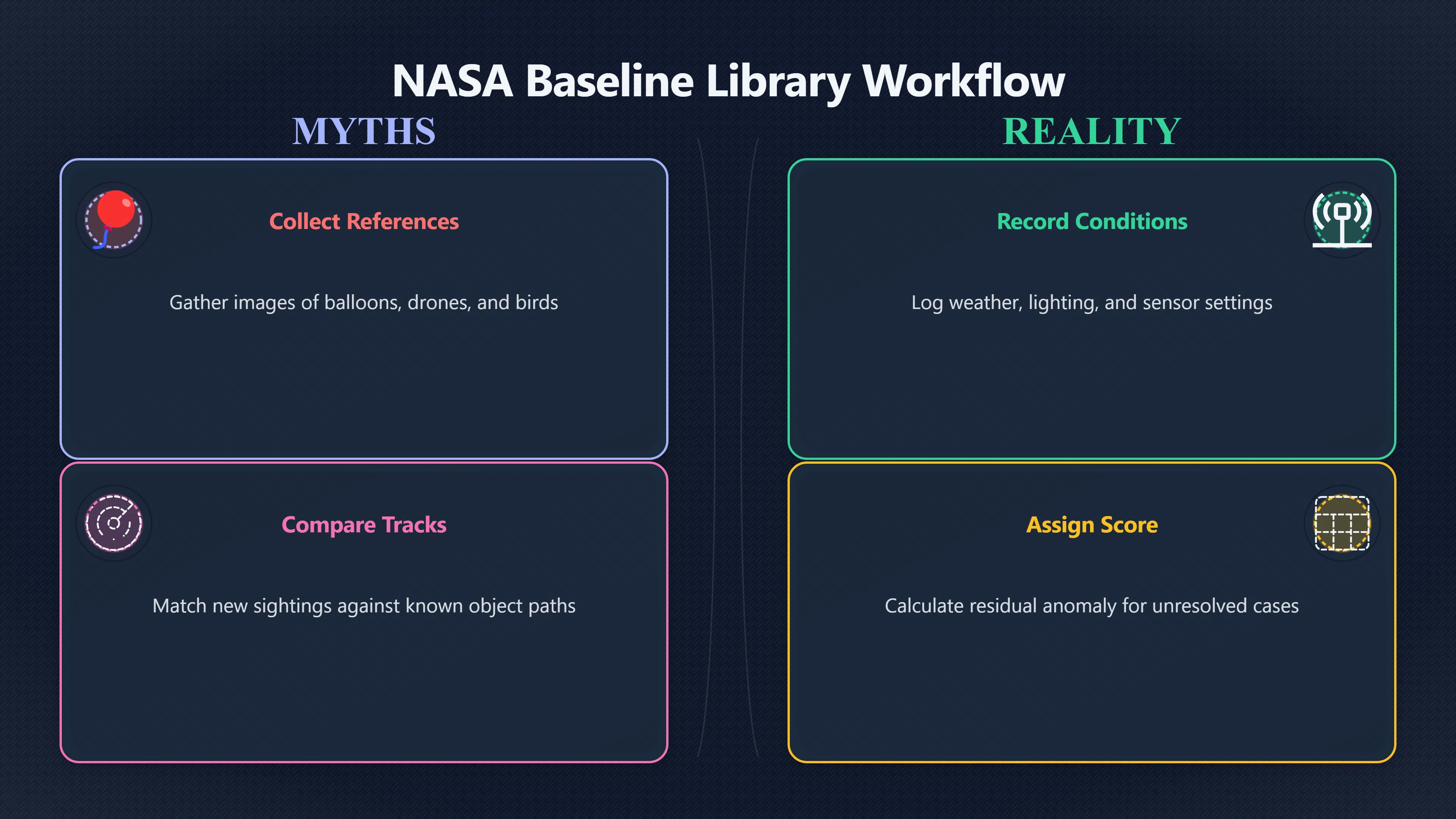
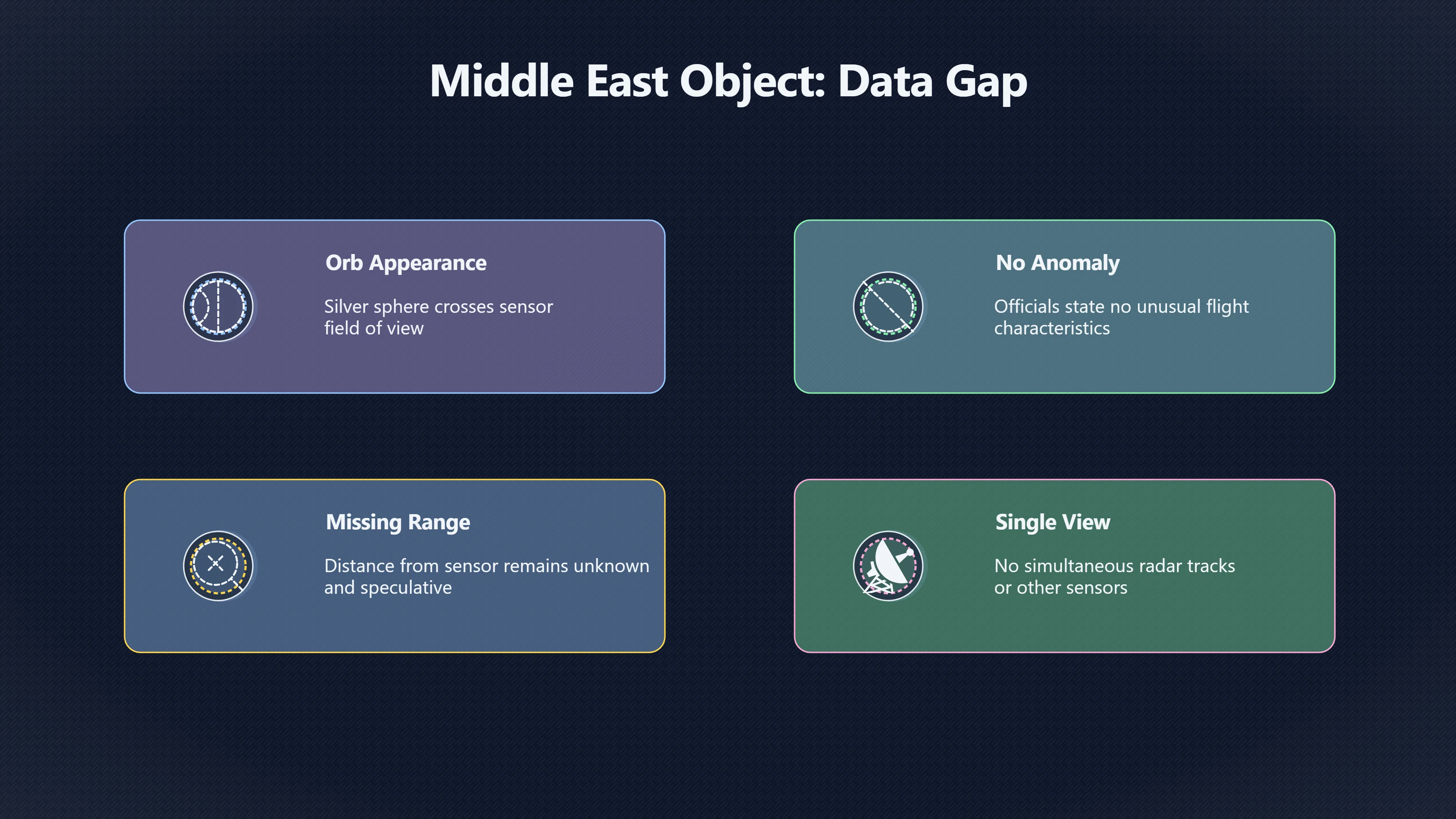
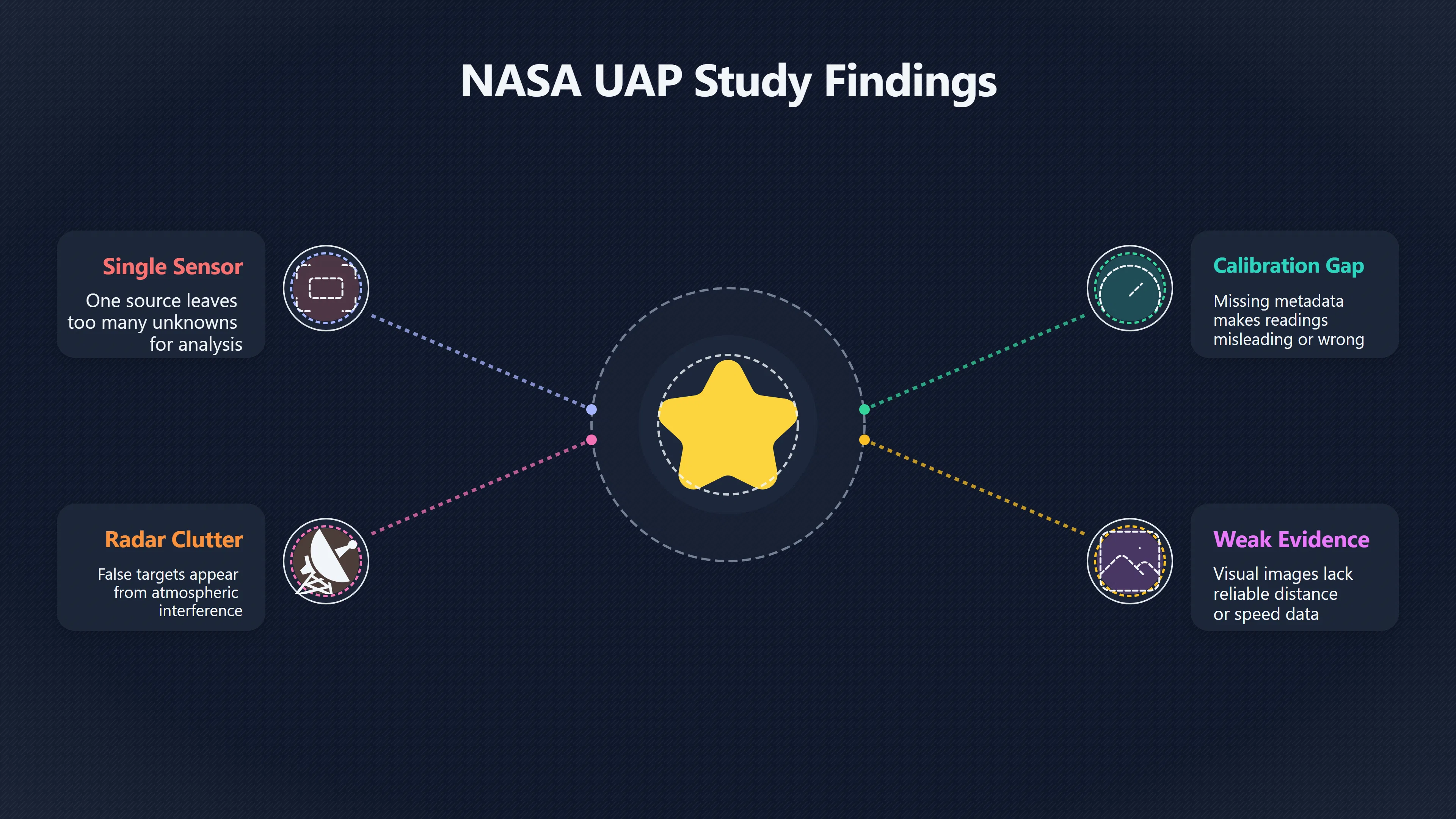
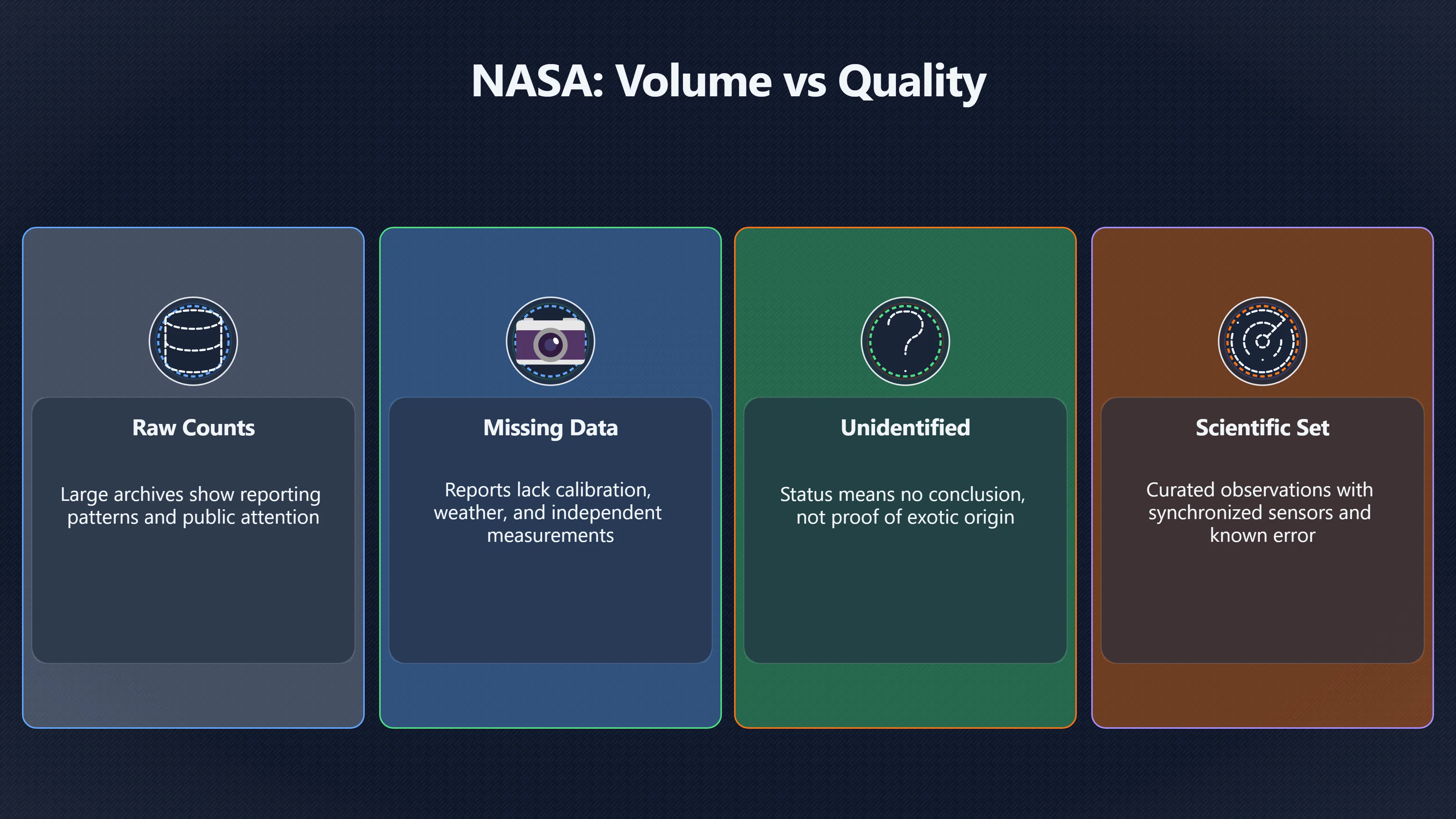
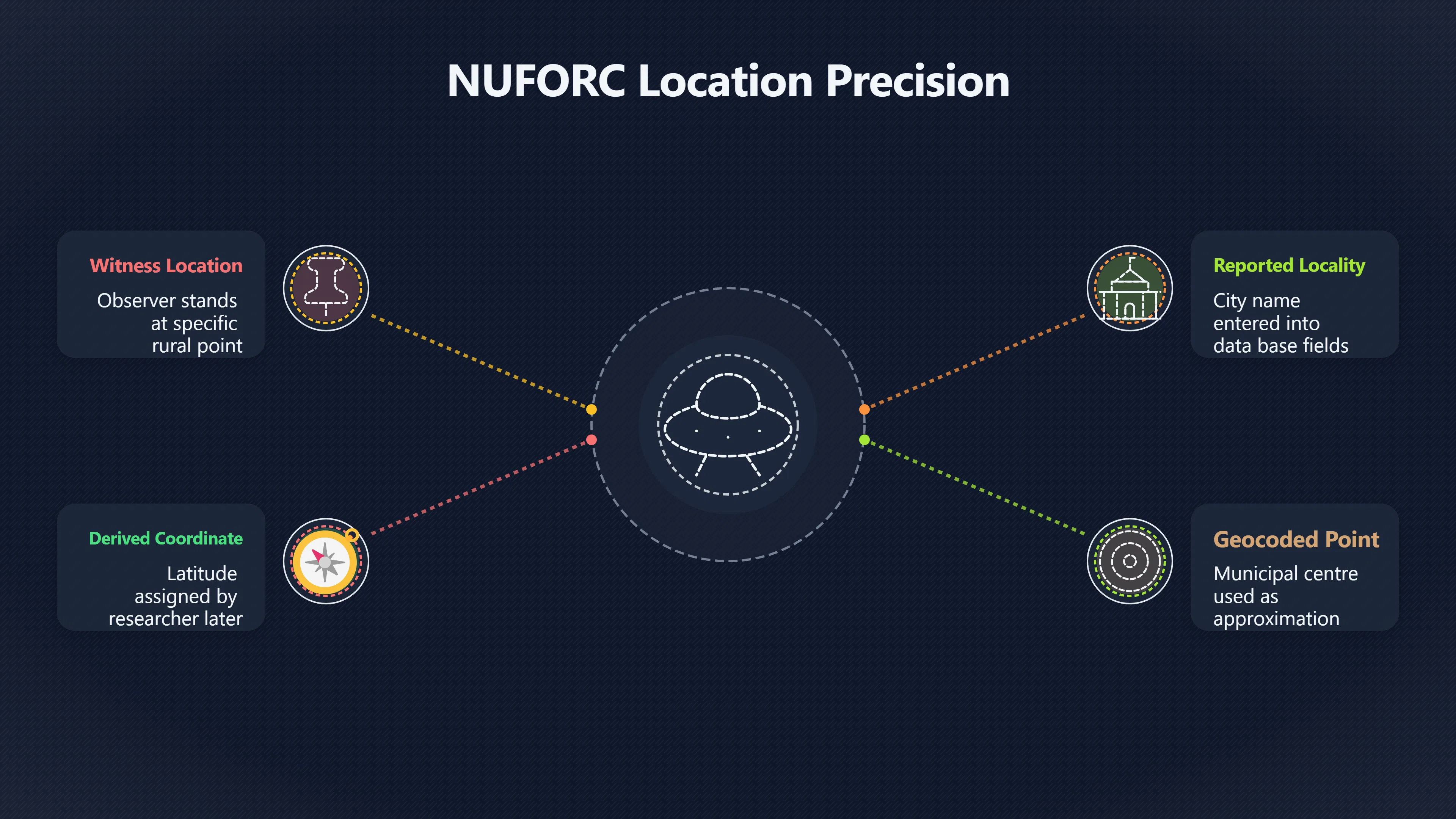
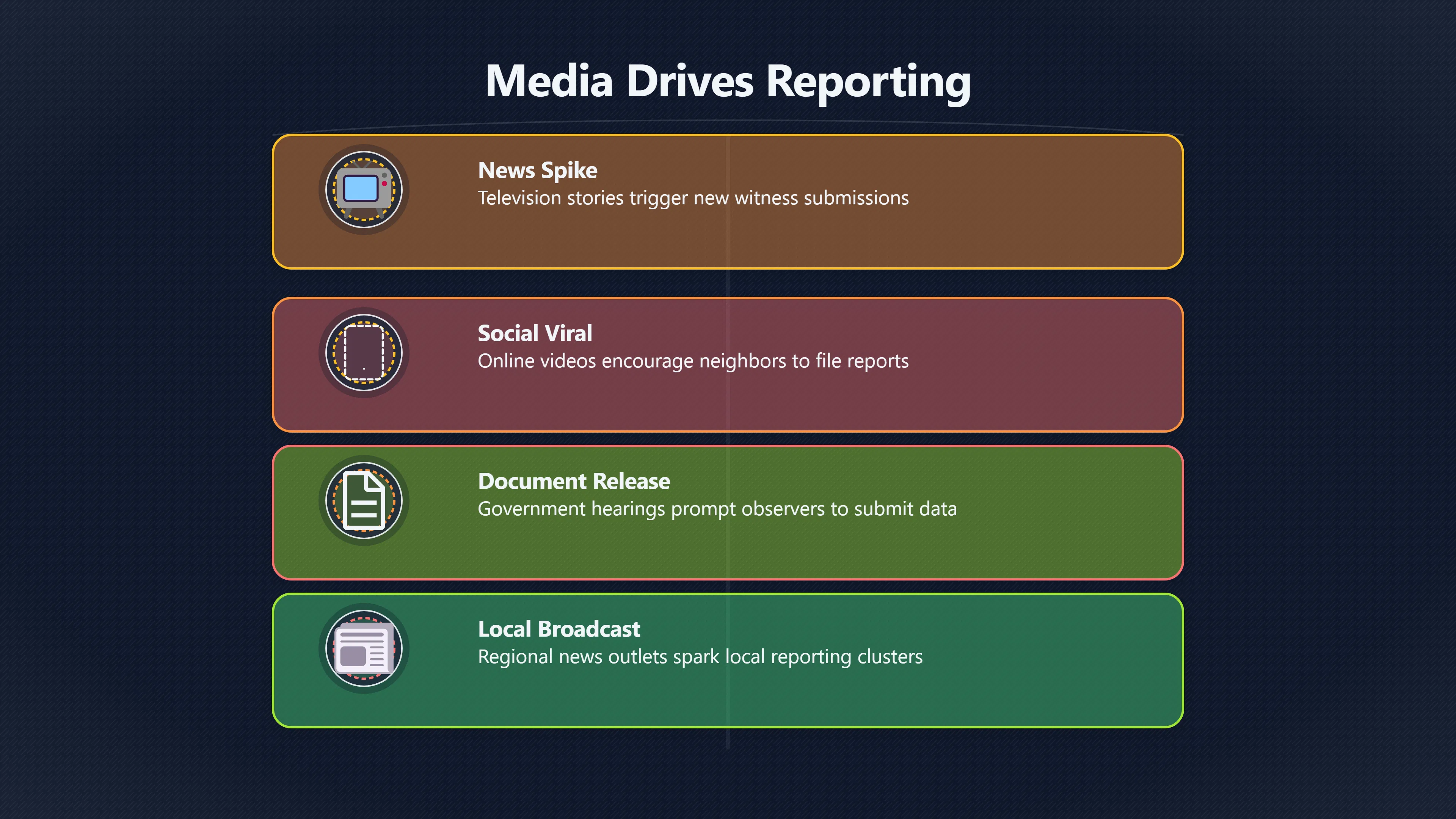
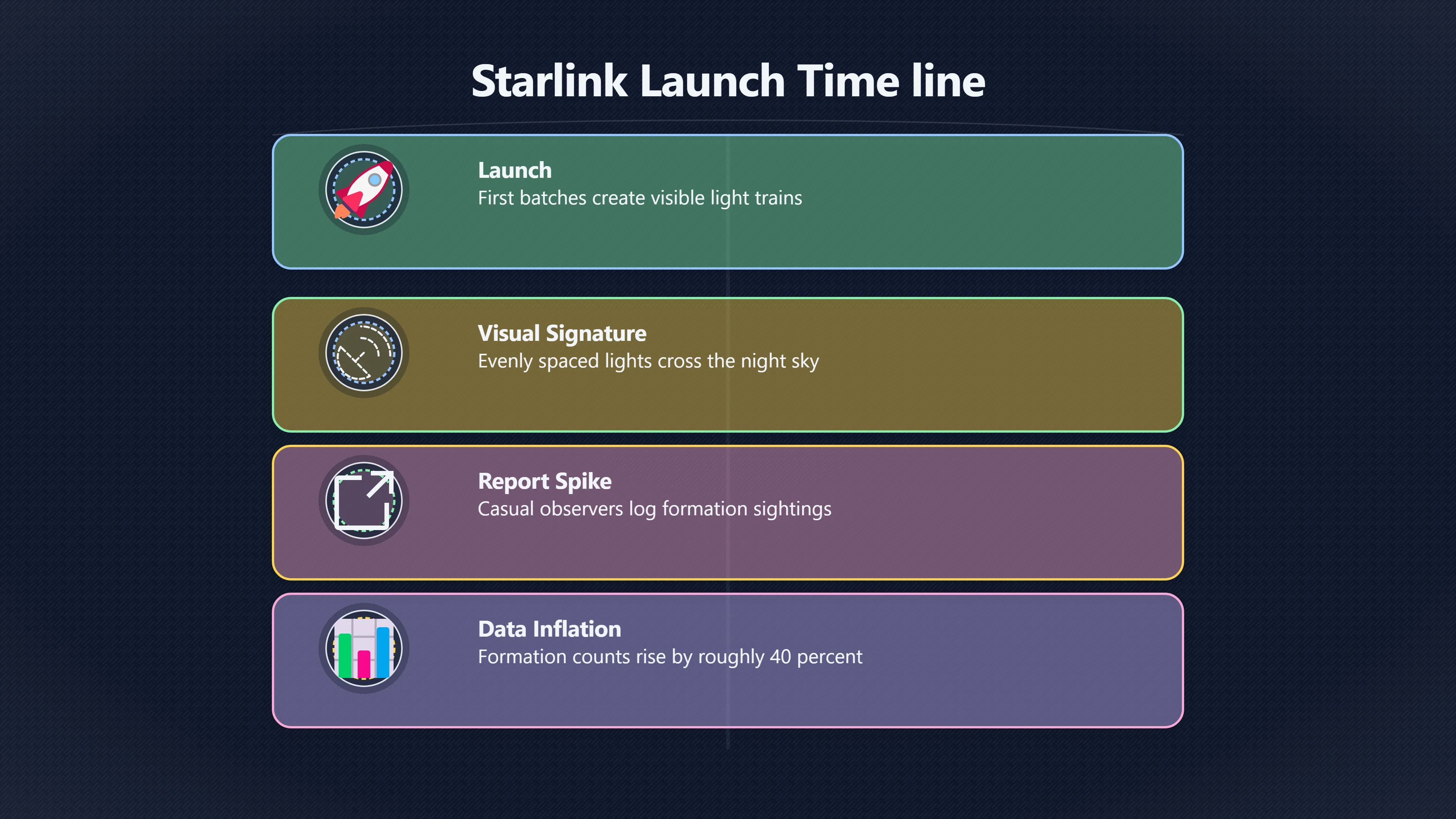
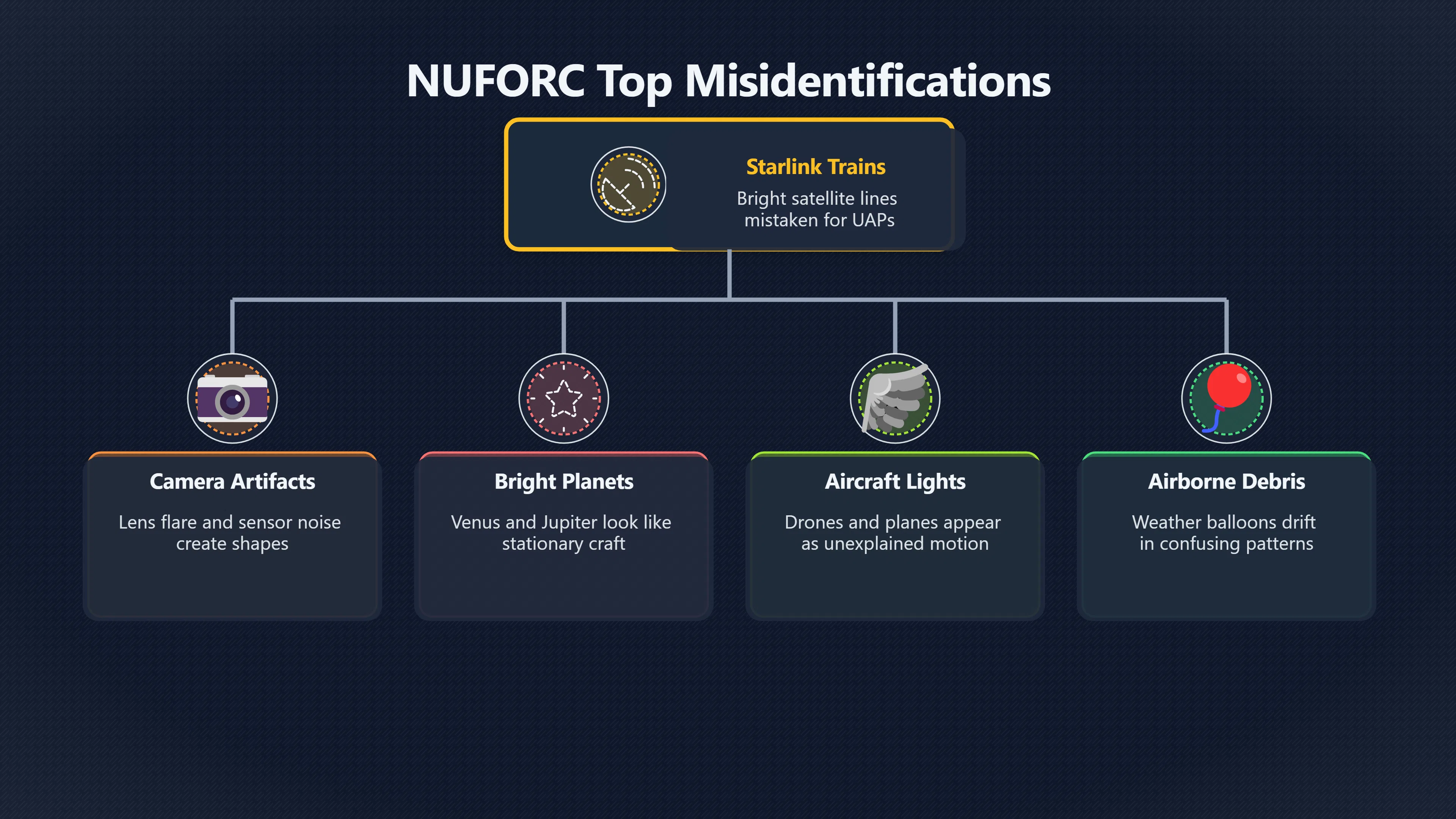
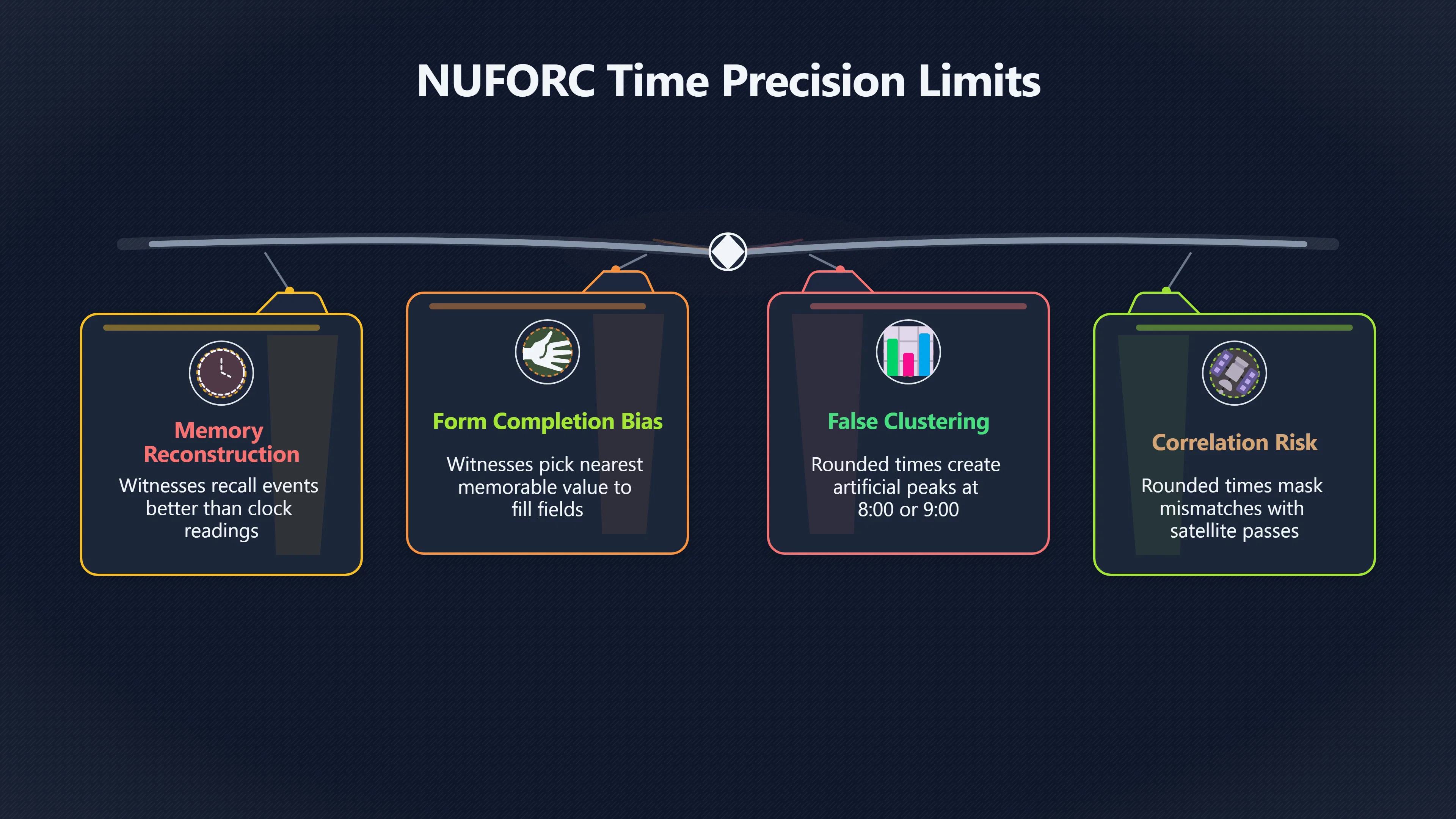
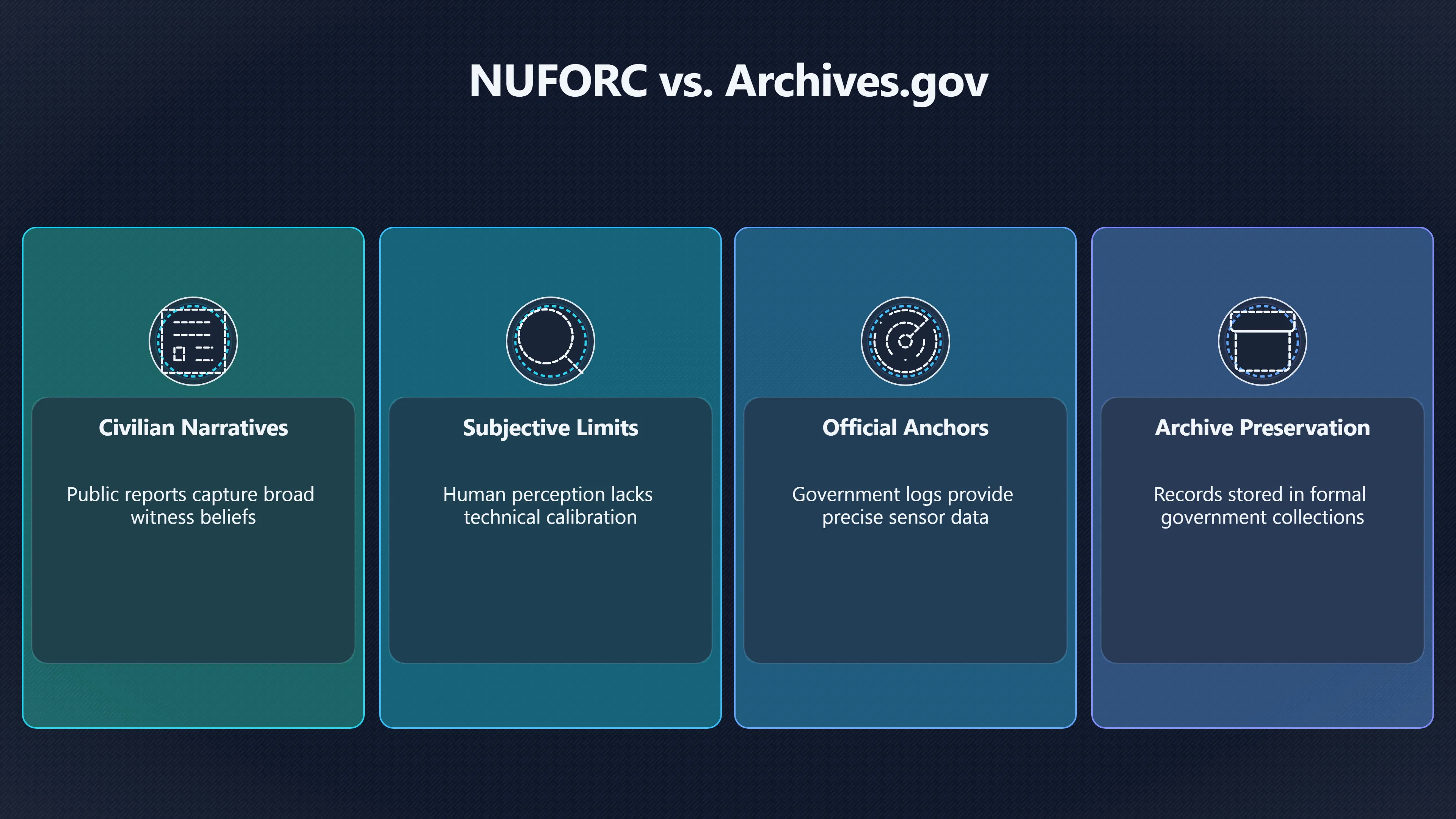
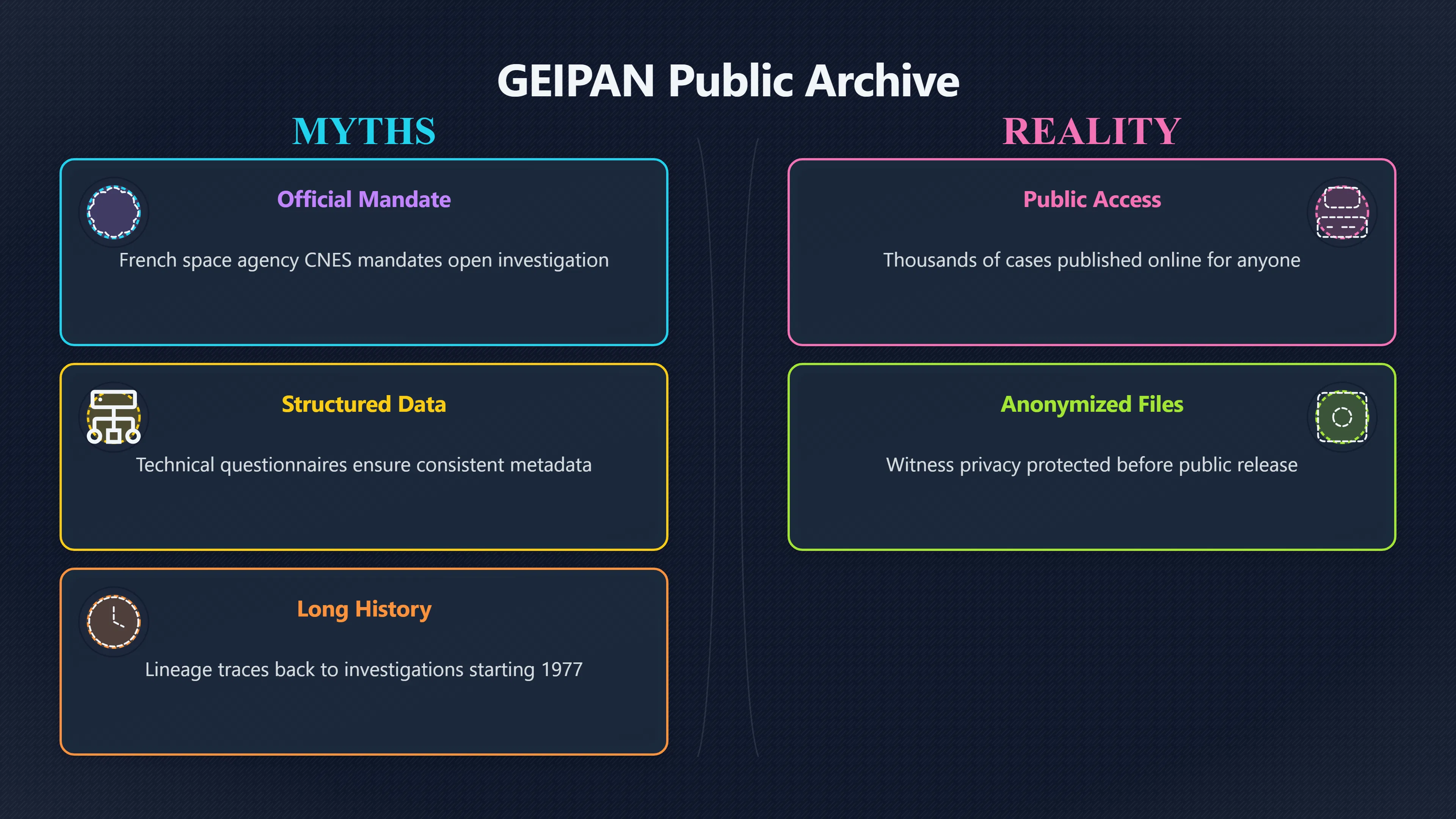
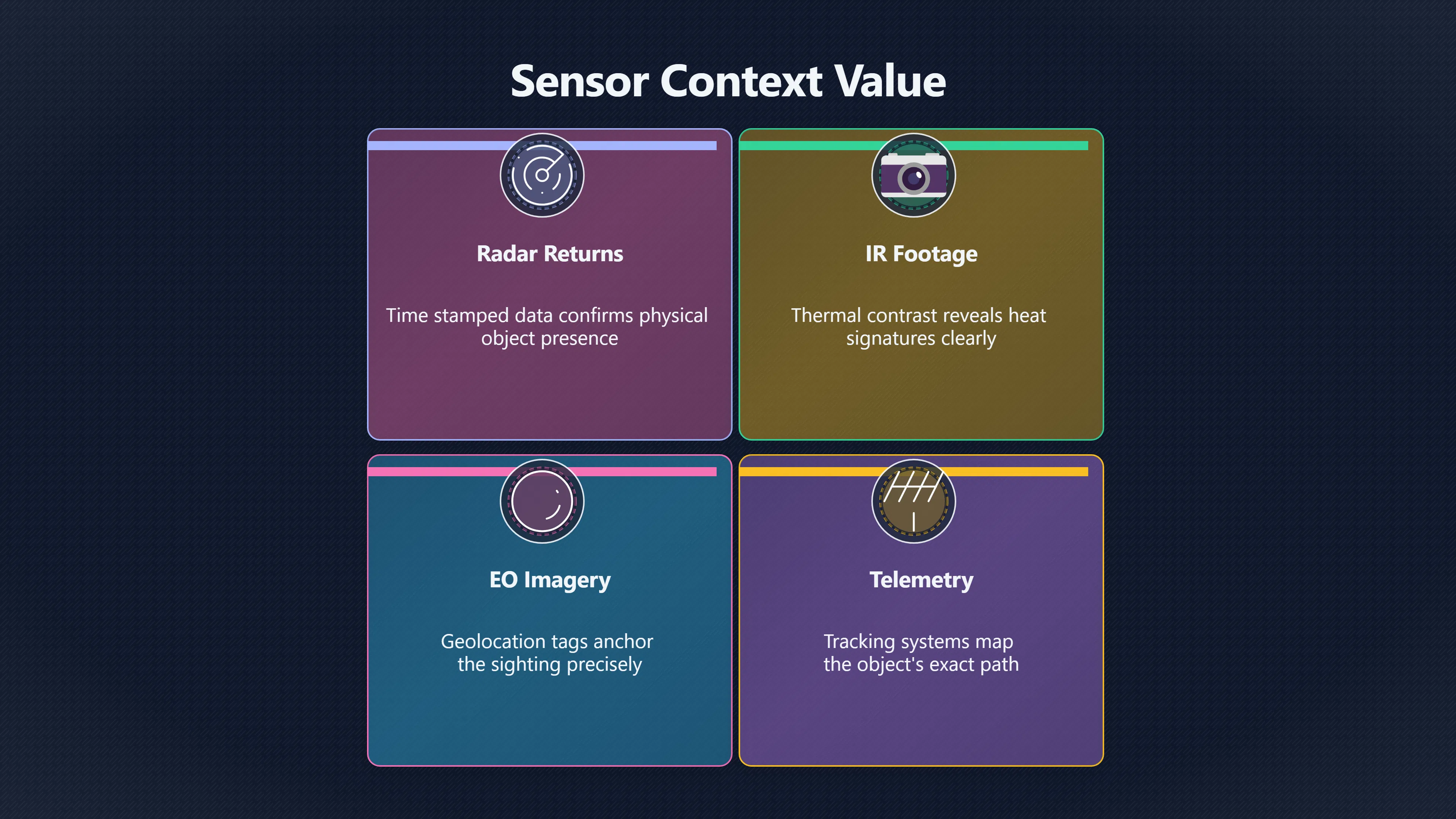
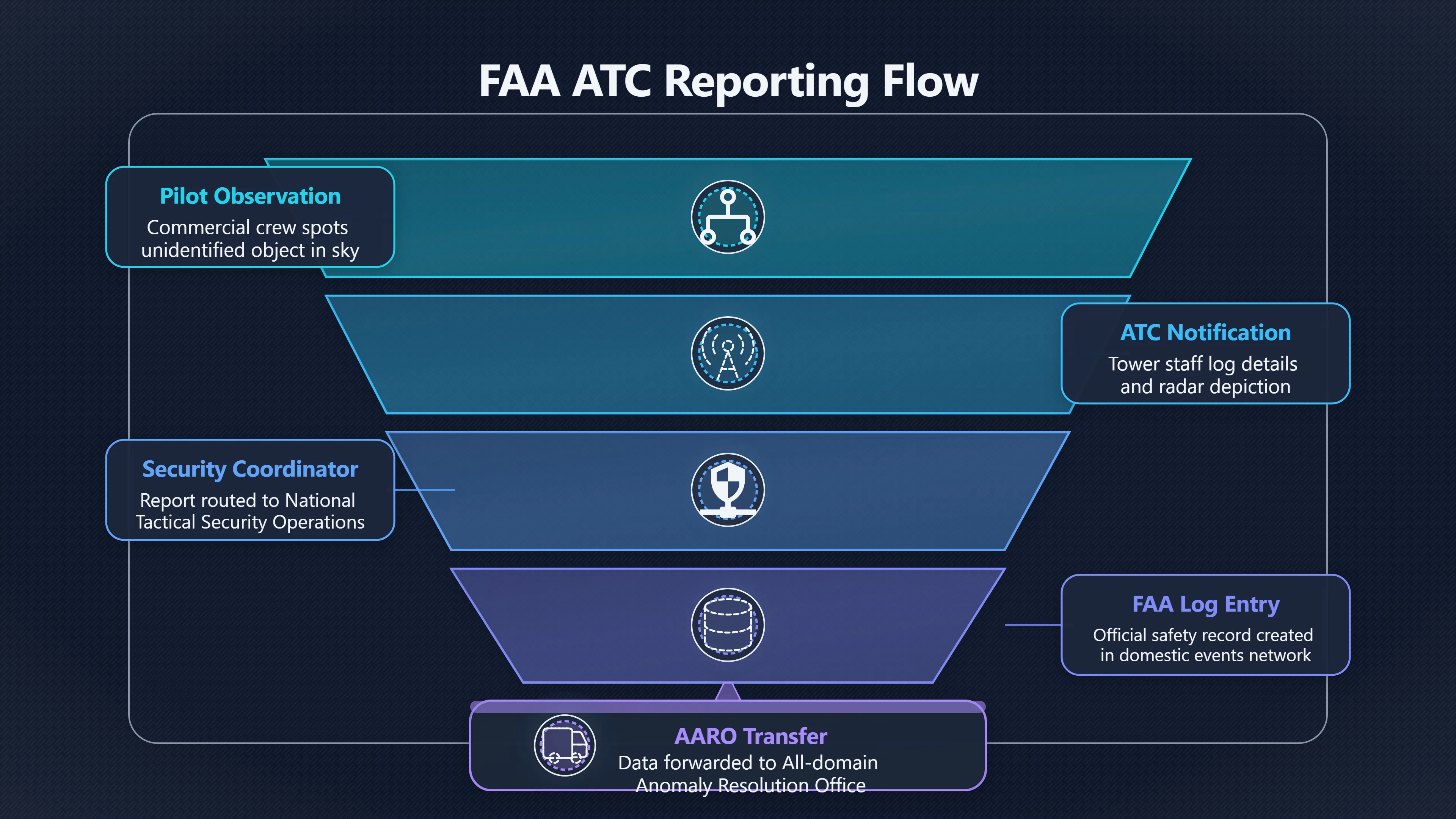
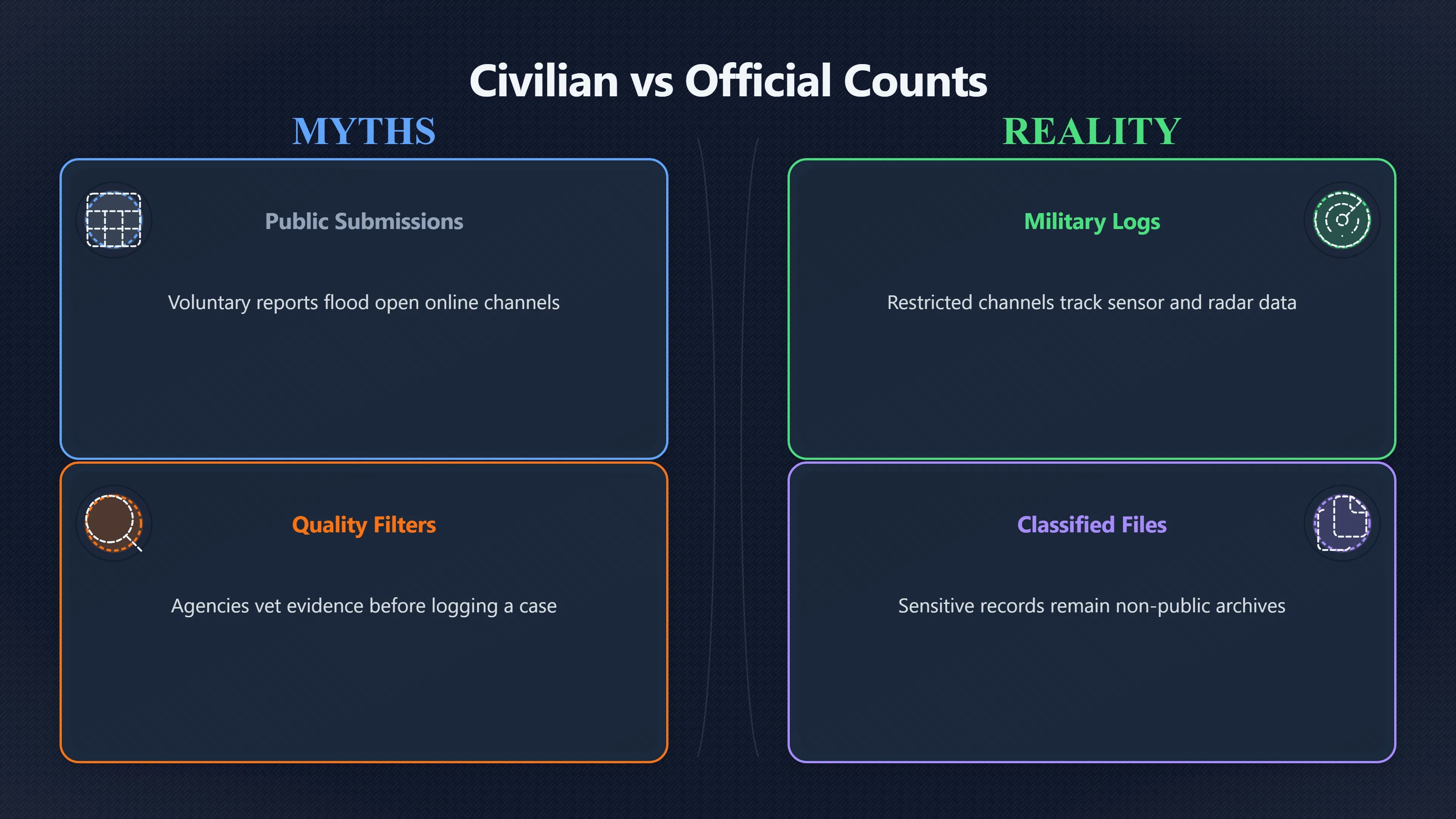
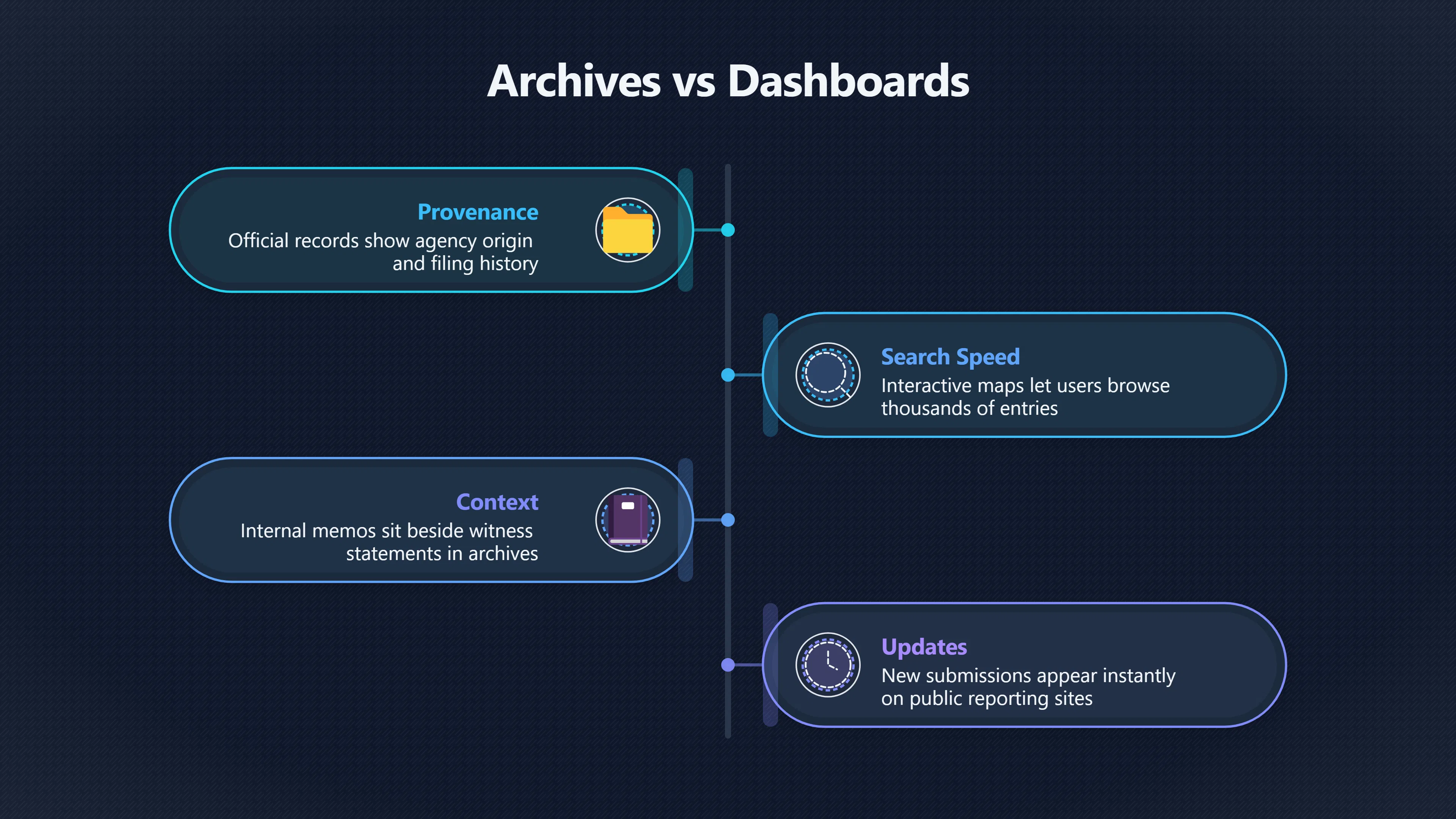
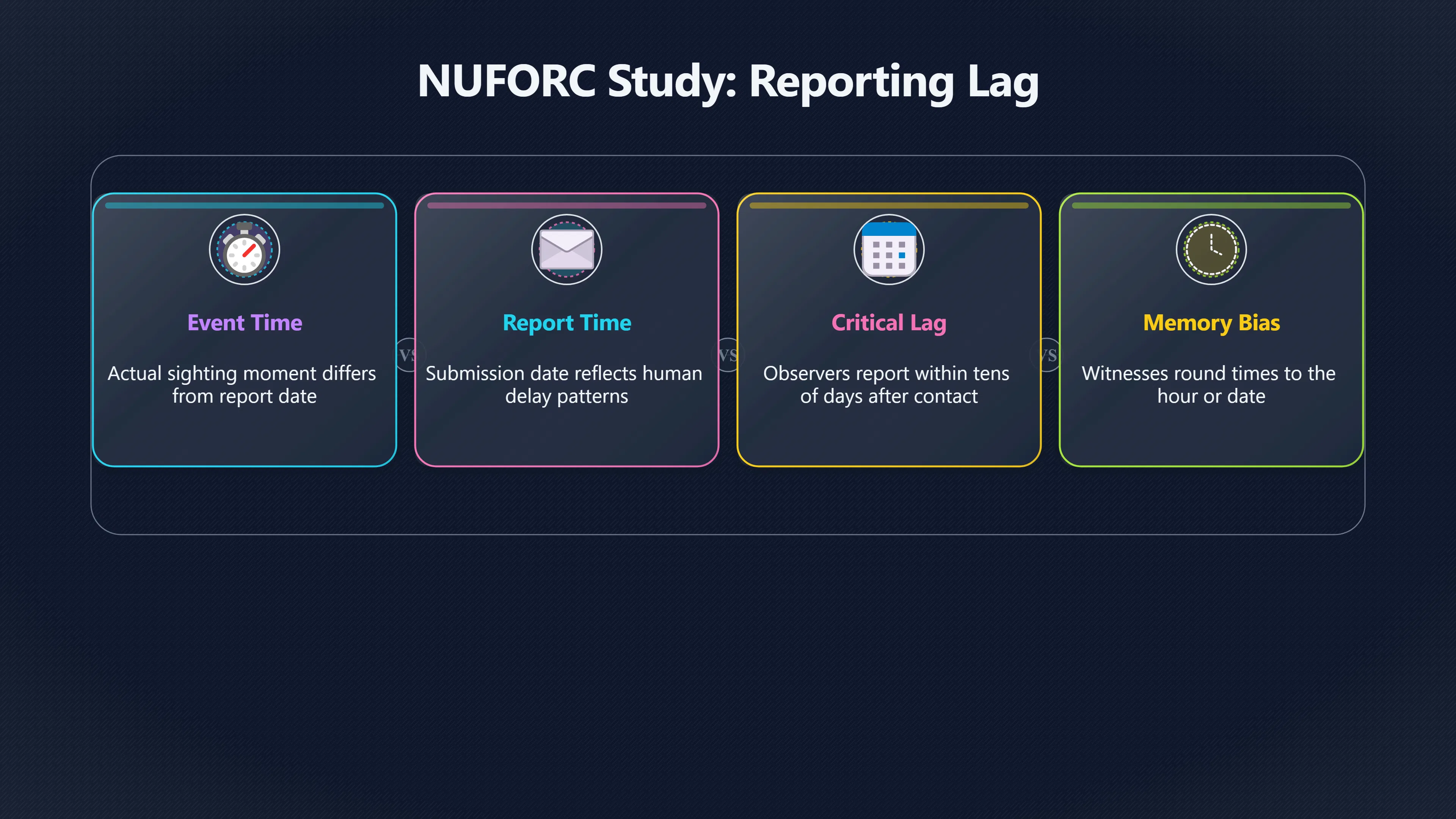
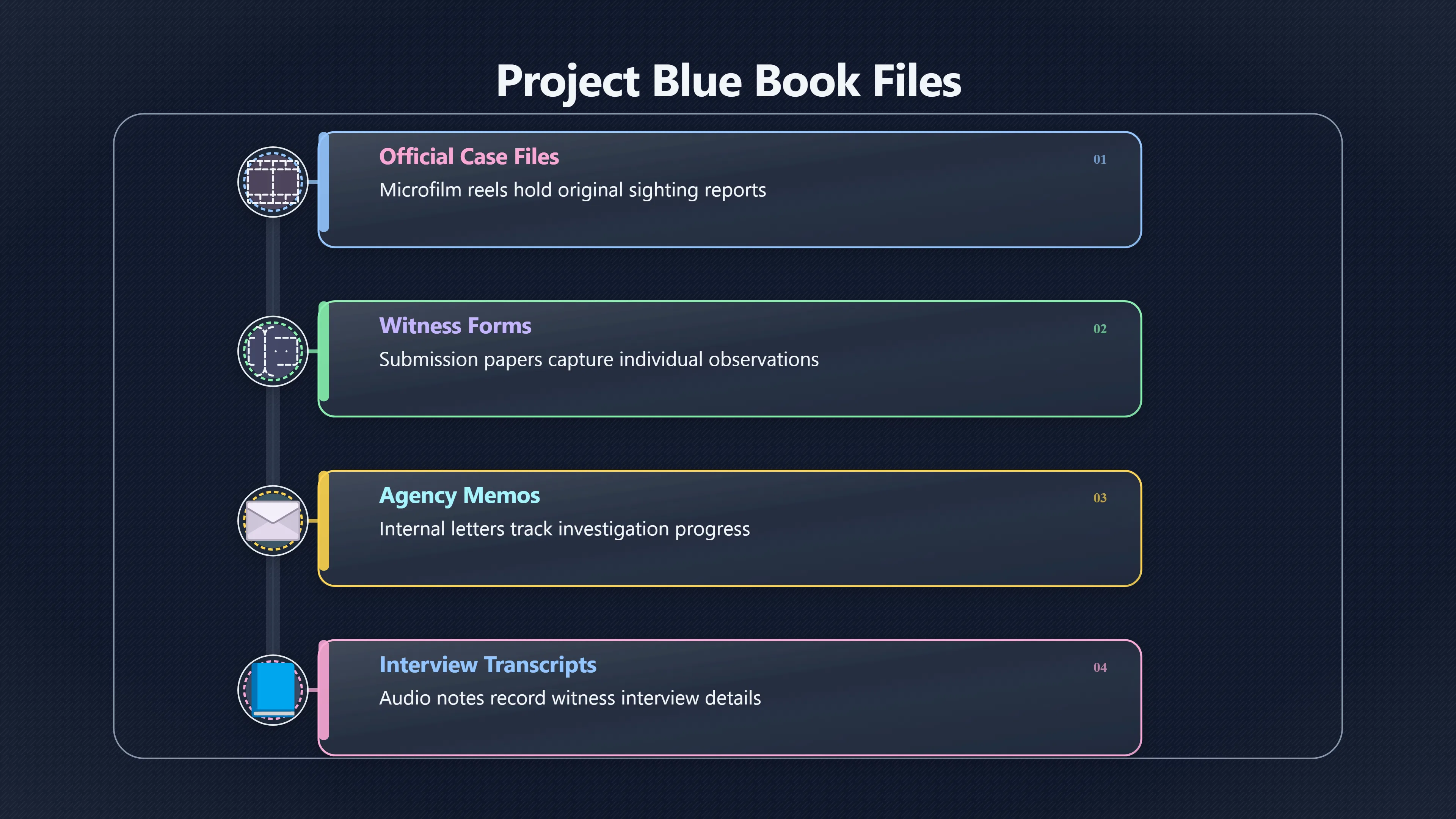
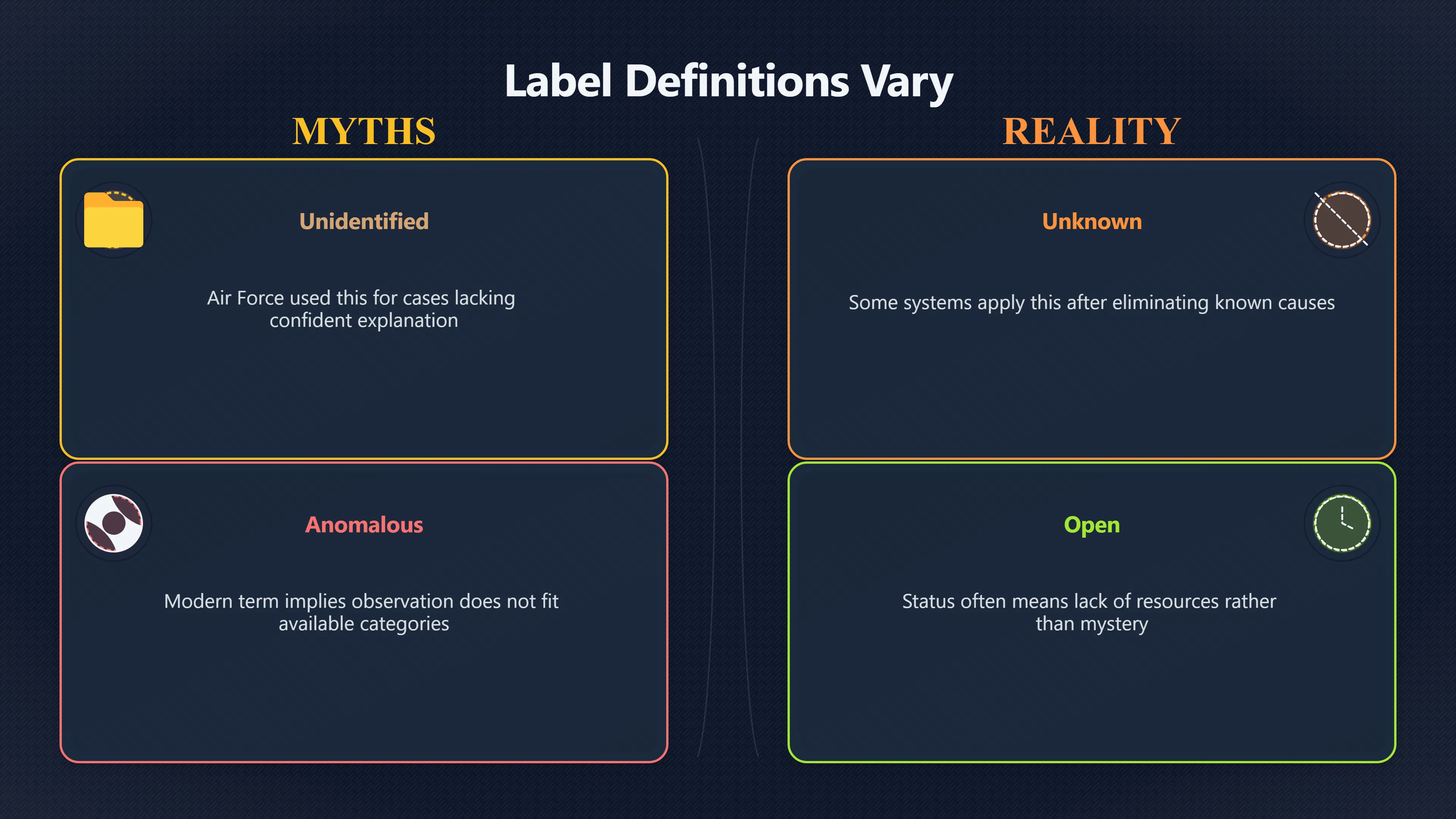
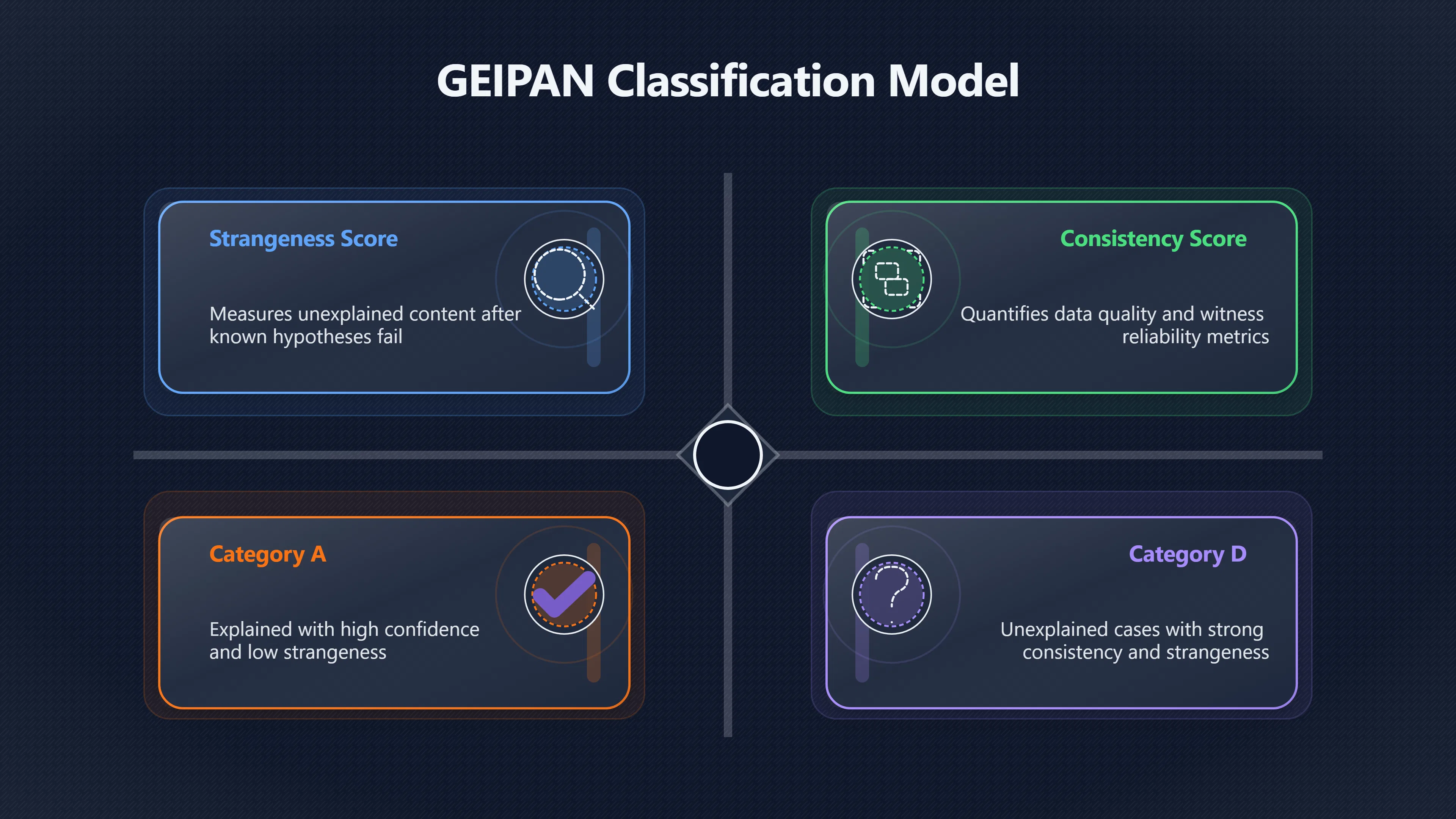
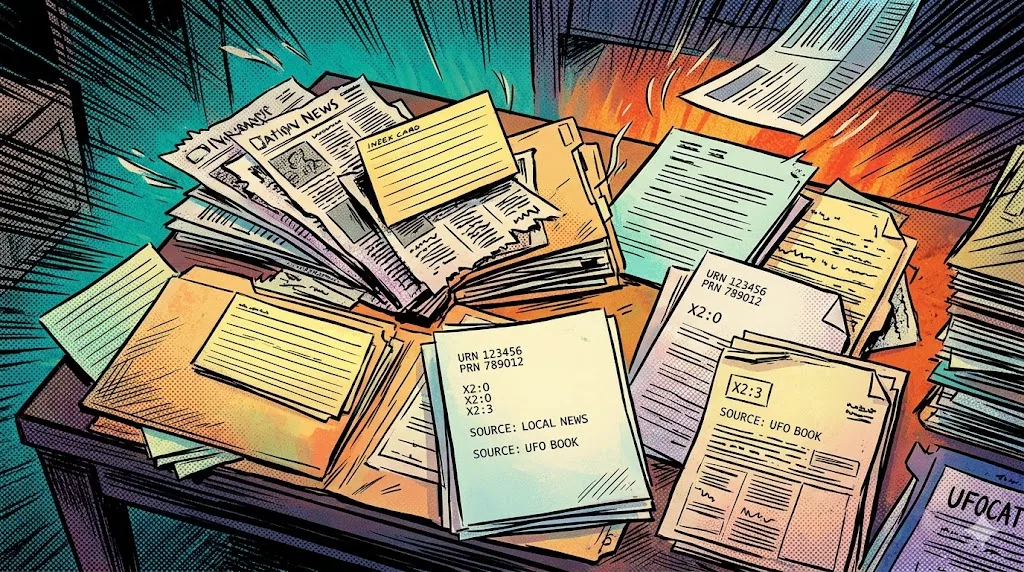
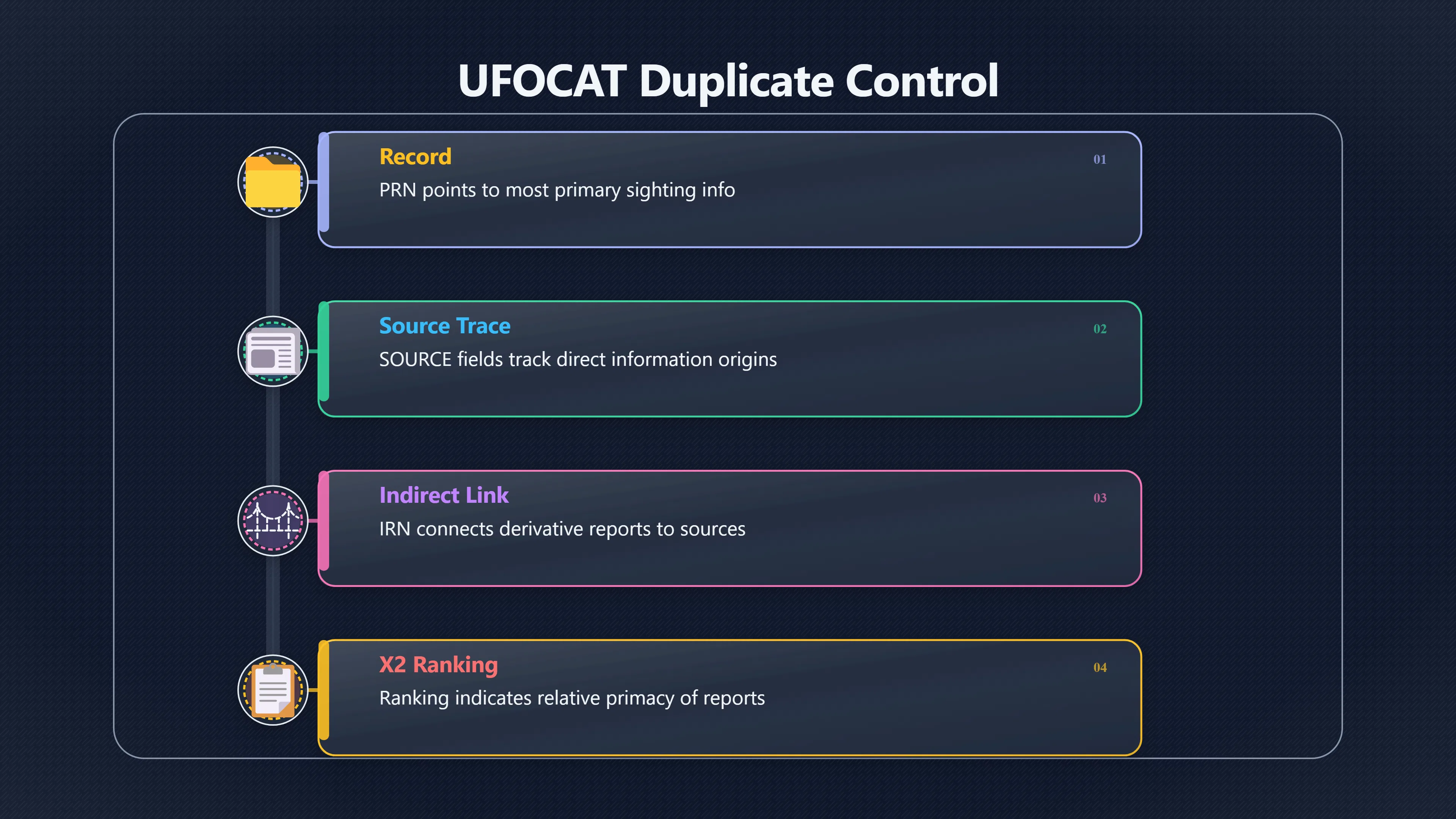
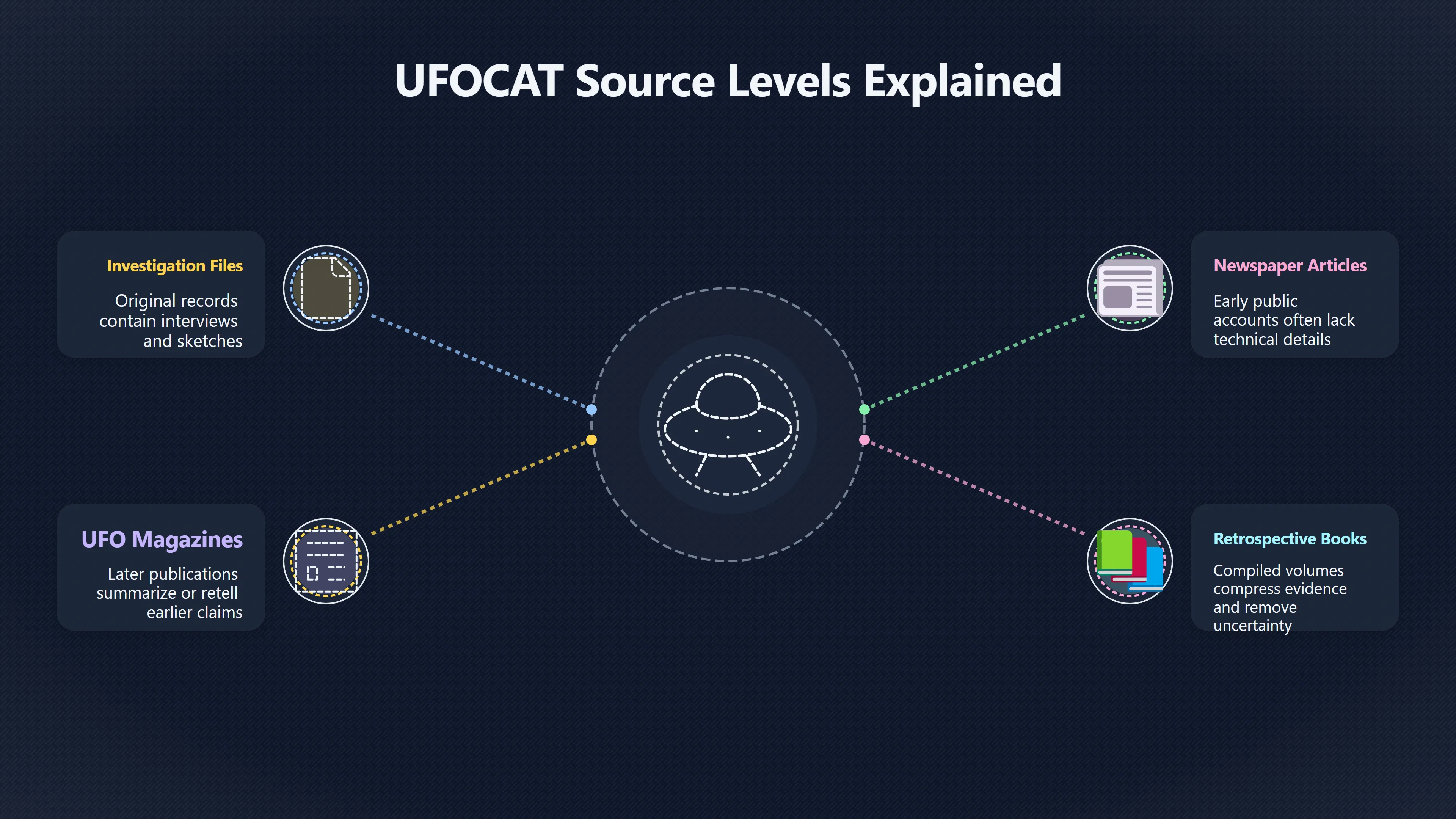
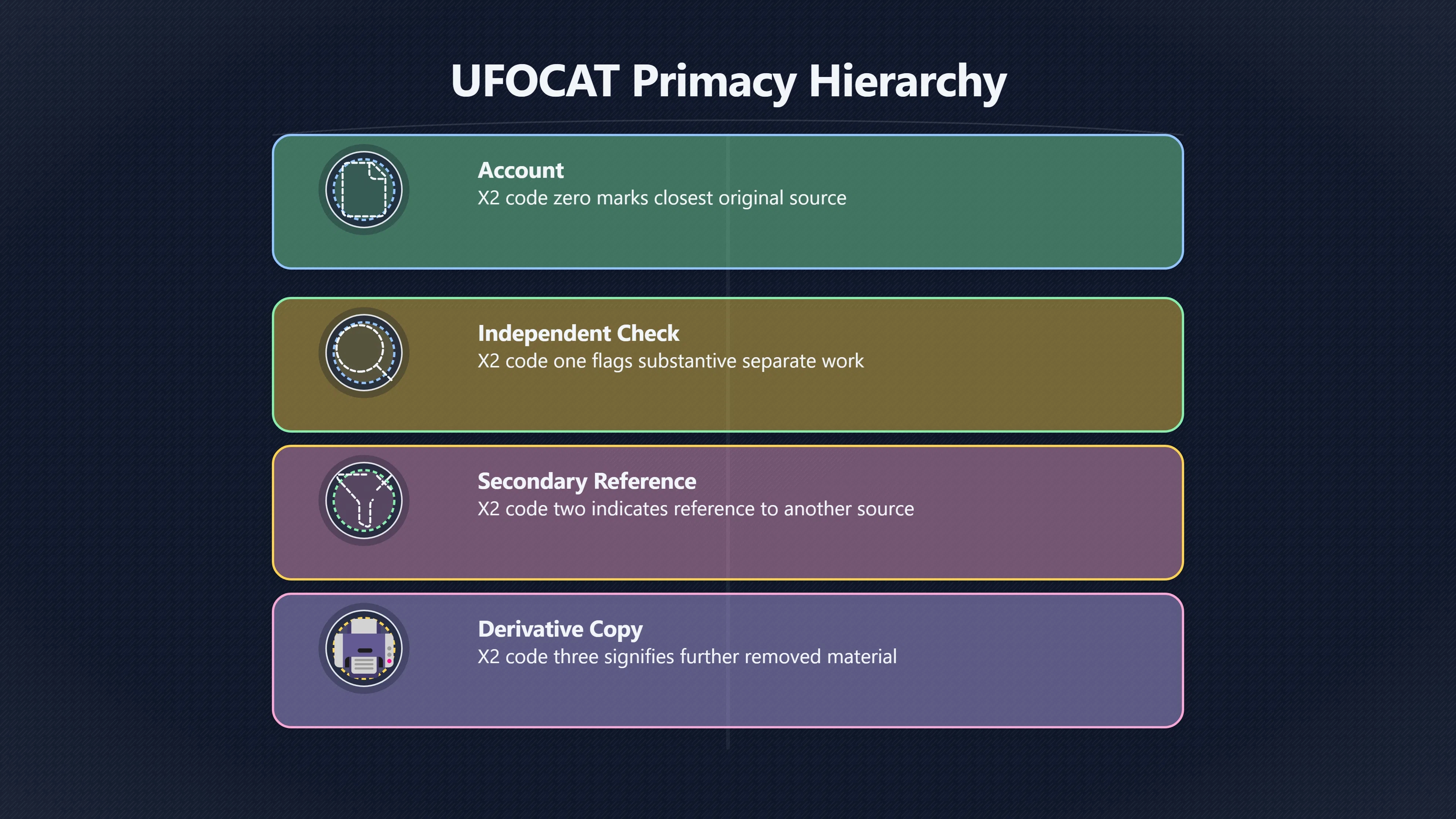
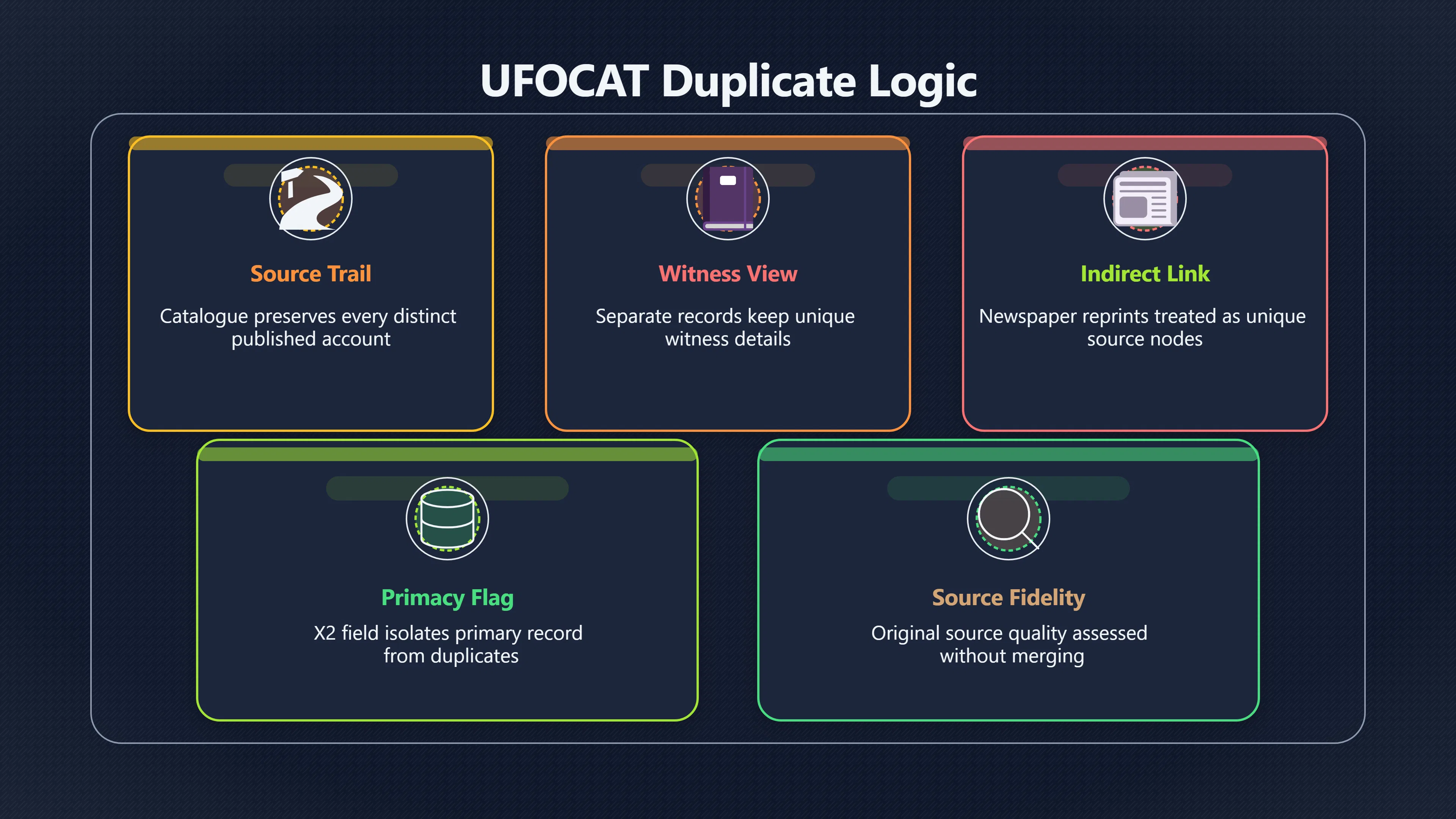
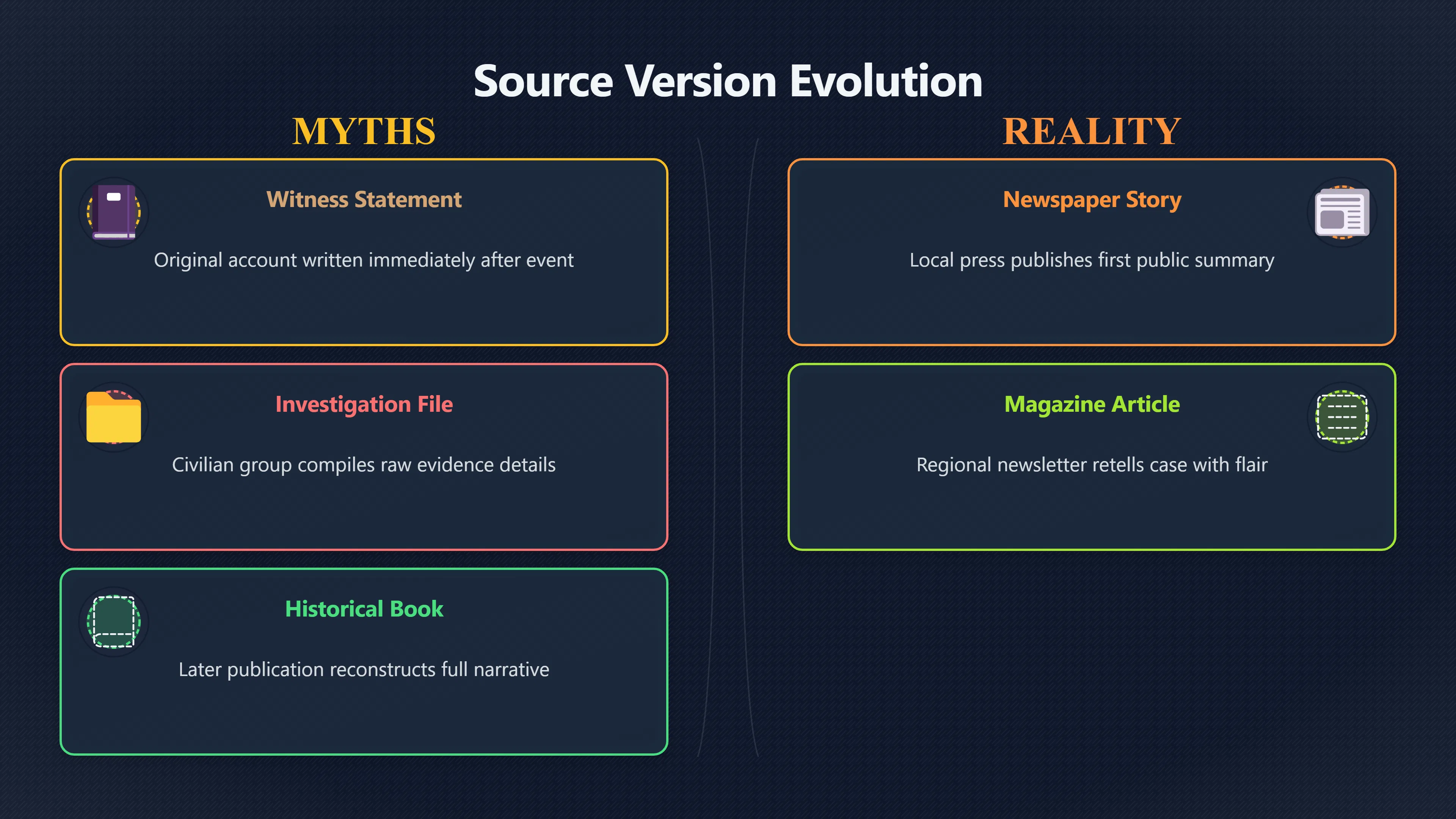
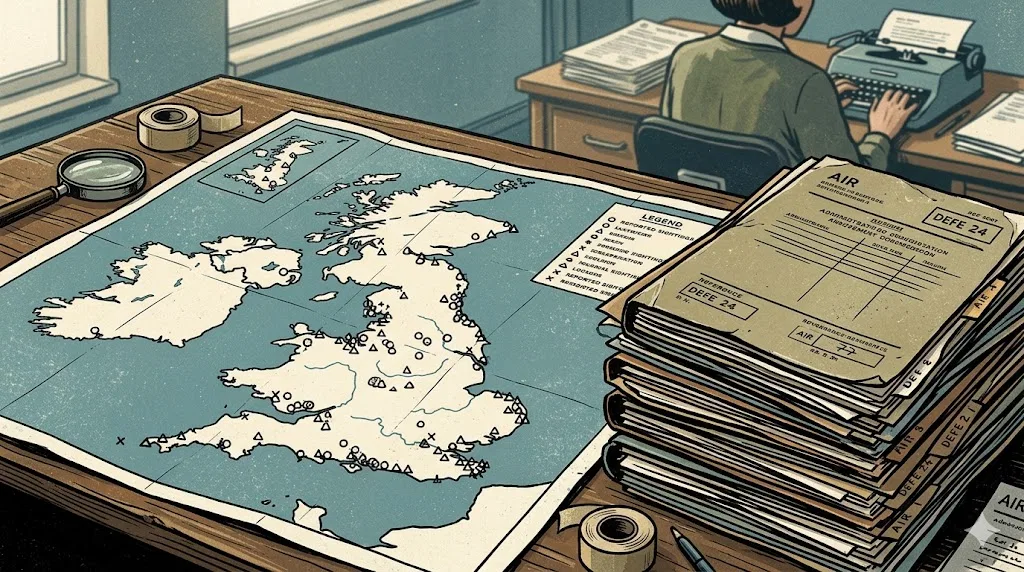
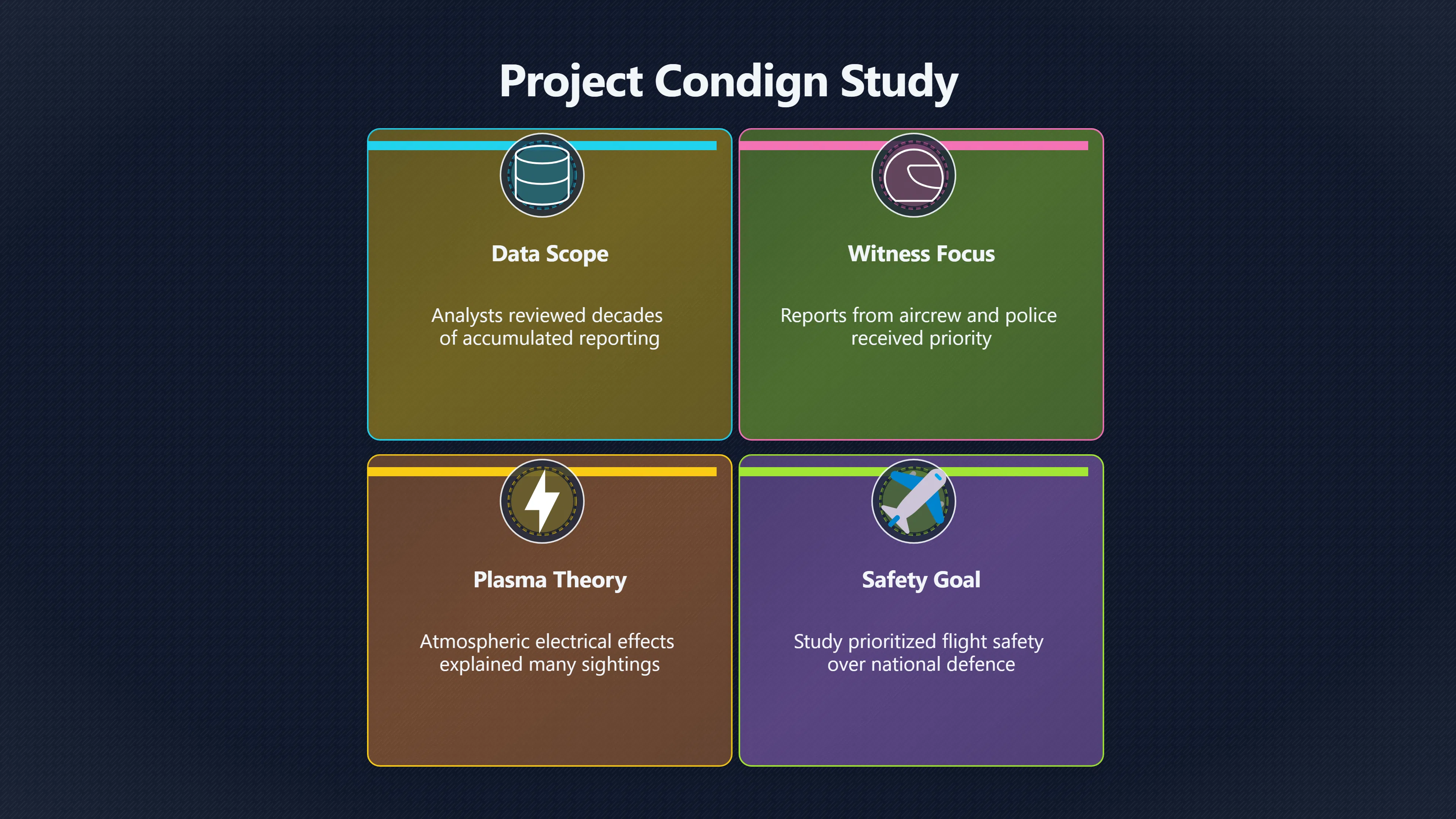
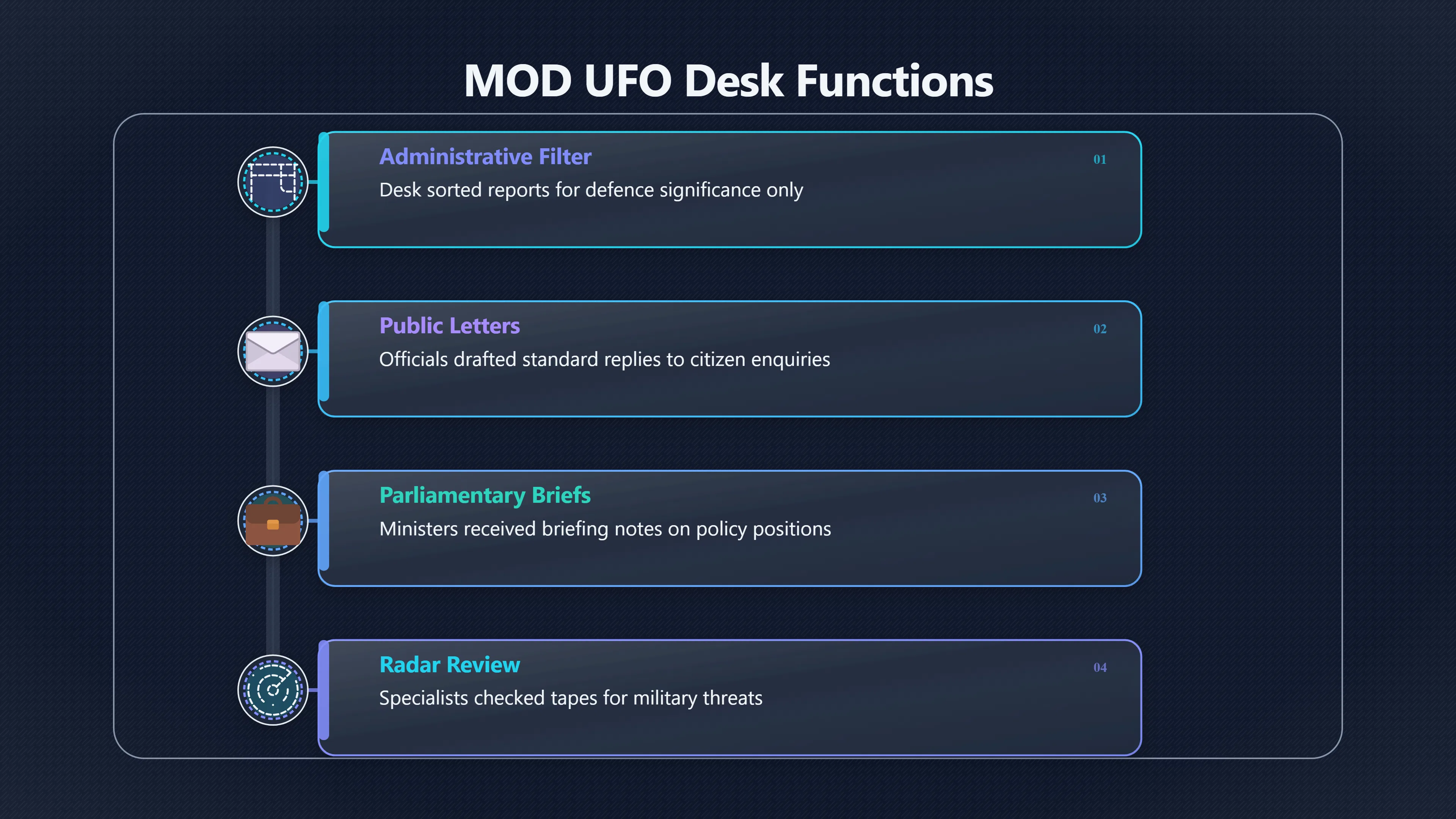
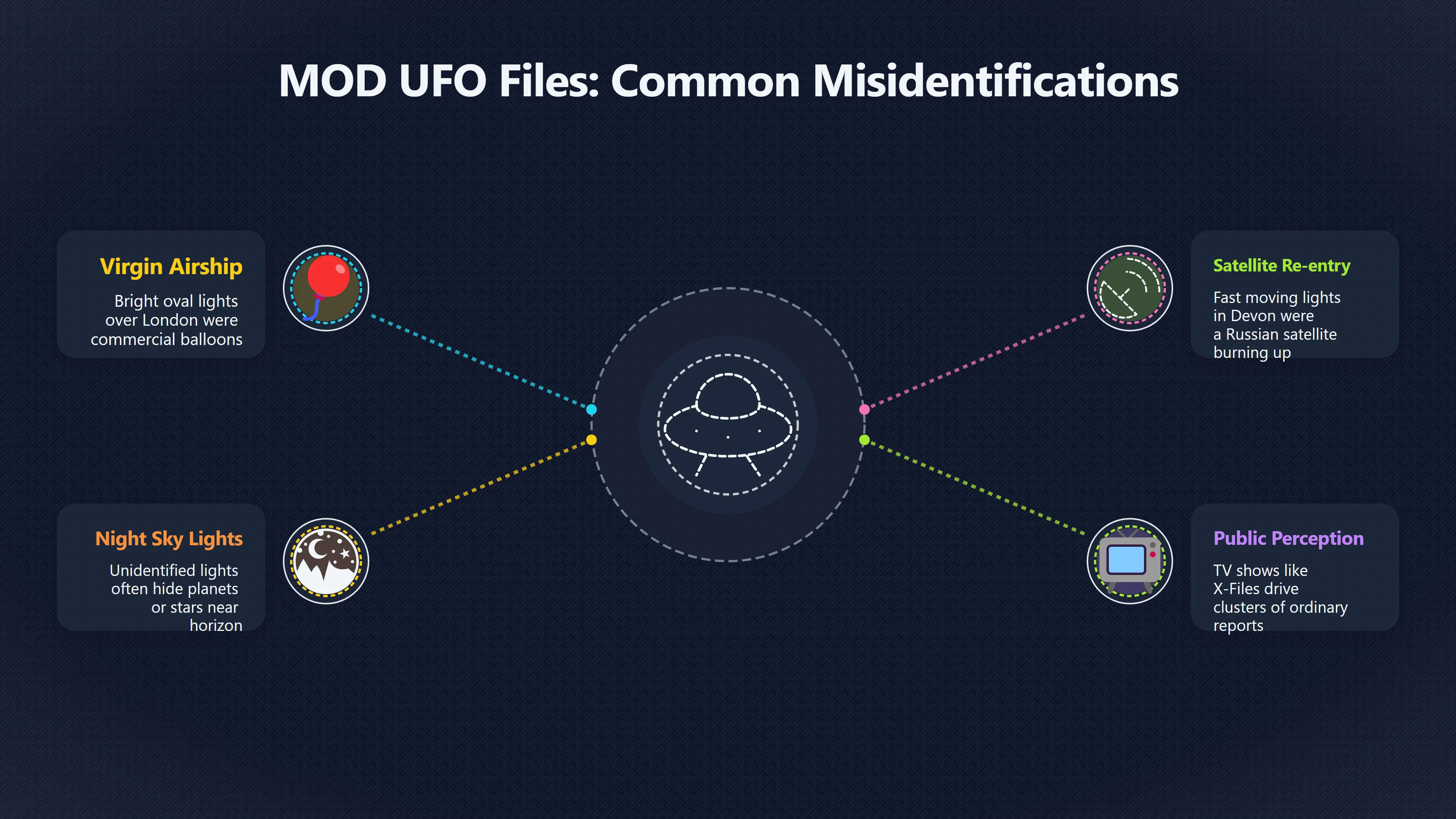
UFO Archives Expand all Collapse all UFO Archives Where UFO Reports Become Usable Evidence UFO report databases and catalogues are best understood as finding aids, not proof engines. They collect witness reports, official case files, photographs, investigative notes, locations, dates and sometimes media, but most entries are still reports of something unidentified at the time of observation rather than confirmed extraordinary objects. 91 pages Read more AARO Why AARO Cases Remain Unresolved AARO reports show that unresolved UAP cases often reflect incomplete data rather than confirmed extraordinary objects. 6 pages +Show subtopics Read more Missing Data The Missing Data Behind Unresolved UAP Cases Without range, angle, timing, platform motion, and file metadata, even striking UAP videos can resist reliable identification. Read more Go Fast Was Go Fast Really Moving That Fast? AARO's GoFast review shows how geometry can turn an apparently fast object into a case with no demonstrated anomalous performance. Read more Active Archive What AARO's Active Archive Really Means AARO's Active Archive often means the record is too thin to resolve, not that a case shows confirmed extraordinary performance. Read more Wake Artefacts When UAP Propulsion Signs Are Sensor Artefacts AARO's atmospheric wake reports show how apparent propulsion signatures can disappear when sensor effects and flight data are checked. Read more FAA Logs Why AARO's Numbers Suddenly Grew The FY2024 jump in AARO reports partly reflects imported civil aviation logs rather than a simple surge in strange events. Read more Archives Finding Original UFO Records in Archives National archive UAP collections help readers move from summaries to institutional records with clearer provenance. 6 pages +Show subtopics Read more RG 615 Transfers How UAP Records Are Transferred to NARA's RG 615 This page examines how federal agencies submit UAP records to NARA under RG 615, including deadlines, metadata, and redaction rules. Read more Media Handling Preserving UAP Photographs, Film, and Sound in Archives This page explains how NARA separates and documents UAP images, motion pictures, and audio to preserve context and metadata. Read more Record Group Context Understanding UAP Files Through Their Record Group Provenance This page highlights how record groups like RG 306, RG 330, and RG 342 provide context and origin for UFO and UAP records. Read more Catalogue & Downloads Using NARA Catalogues and Bulk Downloads for UAP Records This page details how NARA's catalogue and bulk-download systems provide searchable access to UAP images, videos, and documents with metadata. Read more Blue Book Files What Project Blue Book Records Reveal in NARA Archives This page explores the structure of Project Blue Book records, including case files, administrative documents, and microfilm access in NARA. Read more Blue Book What Project Blue Book Records Still Reveal Project Blue Book records reveal how the US Air Force handled UFO cases, classifications, and explanations before 1970. 6 pages +Show subtopics Read more Control Sheets How Control Sheets Structured UFO Sightings and Classifications Understand how investigators used control sheets to categorize sightings and record conclusions systematically. Read more Case Files How Individual UFO Case Files Were Recorded and Evaluated Explore how individual reports were documented, including witness statements, press clippings, and Air Force evaluations. Read more Research Use How Researchers Use Blue Book Records for Historical Analysis Demonstrate how historians and analysts leverage the Blue Book archives to study mid-century UFO investigation practices. Read more Admin Records Internal Administration and Procedures Behind Project Blue Book Investigate internal memos, staffing changes, and procedural updates that shaped how the project managed UFO reports. Read more Case Patterns Patterns in Identifications and Unexplained UFO Reports Analyze trends in the reported sightings, showing common explanations and the subset that remained unidentified. Read more Clusters Why UFO Sightings Cluster on the Map Sky visibility, population density, aircraft traffic, weather, and media attention can shape where UFO reports cluster. 6 pages +Show subtopics Read more Air Traffic How Air Traffic and Military Zones Affect UFO Clustering Proximity to aircraft corridors or military sites increases background aerial activity, often appearing as more UFO reports. Read more Tree Canopy How Landscape and Forest Cover Affect UFO Reports Dense tree cover and uneven terrain reduce sky visibility, lowering UFO report frequency in affected areas. Read more Light Pollution How Light Pollution Shapes UFO Report Clusters Regions with lower light pollution tend to show higher numbers of UFO reports due to clearer visibility of the night sky. Read more Weather Patterns Why Cloud Cover Reduces UFO Sightings in Some Areas Frequent cloud cover and adverse weather reduce visibility, contributing to lower UFO report numbers in certain regions. Read more Population Density Why Denser Populations Produce More UFO Sightings Areas with higher populations generally generate more UFO reports due to more potential witnesses and reporting culture. Read more Duplicates How One UFO Sighting Becomes Many Records Duplicate handling is essential because one event can appear in multiple forms, articles, files, and databases. 6 pages +Show subtopics Read more Witness Clusters Do More Witnesses Mean More UFOs? Independent witnesses can make a case stronger, but their reports should usually strengthen one event rather than create many events. Read more Report Chains How One Sighting Turns Into Many Records One sighting can multiply across witness forms, newspapers, investigators and later catalogues without becoming several separate events. Read more Event Counts What Happens When UFO Rows Are Counted Once Counting linked incidents instead of rows gives a more realistic picture of how often unusual sightings were actually reported. Read more Merged Data Why Big UFO Datasets Double Count Cases Large combined datasets can preserve the same case under different dates, places, shapes or source labels unless matching is source-aware. Read more Video Rows Why One UFO Clip Is Not Always One Event A repository entry may be one clip, one report packet or one angle on a broader incident, so video counts need careful interpretation. Read more Enigma Can a UFO App Fix Old Data Problems? Enigma Labs shows how modern apps try to add metadata, maps, media, and deconfliction to public UFO reports. 6 pages +Show subtopics Read more Camera Metadata How Enigma Captures Location and Angle Metadata Enigma's in-app camera records location, angle, and time to contextualize UFO videos. Read more NJ Drone Scare How Enigma Handled the 2024 New Jersey Drone Surge During the drone scare, Enigma saw a spike in video uploads, moderated by staff to reduce hoaxes. Read more Object Identification How Enigma Identifies Planes, Satellites, and Stars Enigma's Identify Lens helps distinguish planes, satellites, stars, and planets in real-time. Read more AI Scoring How Enigma Uses AI to Rate UFO Reports Enigma rates each report with an AI-generated score from 1 to 100 for reliability and anomalousness. Read more Map Clustering Using Maps and Community Feedback to Spot Clusters Enigma uses interactive maps and user feedback to identify clusters and verify reports. Read more GEIPAN How France Classifies Public UAP Cases France's GEIPAN offers a useful model for publishing official UAP cases with classifications and investigation status. 6 pages +Show subtopics Read more A & B How GEIPAN Determines Identified and Probable Cases This page details what 'identified' and 'probably identified' mean in GEIPAN's classification system. Read more Reclassified Cases How GEIPAN Revises UFO Case Classifications Over Time Focuses on how GEIPAN updates past case classifications when new information or analysis becomes available. Read more Case Studies Lessons from Notable GEIPAN UFO Case Files Examines individual high-profile or illustrative GEIPAN cases to show classification in practice. Read more Case Statistics Understanding GEIPAN's Public UFO Case Statistics Breaks down the percentages of A, B, C, and D cases in GEIPAN's published statistics and their significance. Read more C Cases Why Some UFO Reports Remain Unidentified Due to Insufficient Data Explains how GEIPAN classifies cases as C when there is insufficient information to make an identification. Read more Misidentifications Why Ordinary Objects Fill UFO Databases Balloons, birds, aircraft, satellites, and weather effects can all enter UFO databases before they are identified. 6 pages +Show subtopics Read more Balloons When balloons look like intelligent craft Balloons can appear to hover, brighten, drift oddly, or maneuver when observers lack wind and depth cues. Read more Camera artifacts When the camera creates the UFO Phone videos and photos can turn birds, insects, glare, focus effects, and compression into convincing UFO entries. Read more Orb reports Why ordinary lights become UFO orbs Point lights can enter UFO databases as orbs when distance, motion, and focus are missing or misread. Read more Pilot sightings Why pilot reports still need checks Experienced observers can report persuasive UAP cases that become explainable only after orbital and flight data are compared. Read more Unresolved cases Why unexplained does not mean extraordinary Unresolved cases may reflect missing time, location, direction, or media detail rather than exotic technology. Read more MUFON How MUFON Turns Sightings Into Cases MUFON combines witness reports with field investigations, creating useful leads but uneven public access to case detail. 6 pages +Show subtopics Read more Report bias Do MUFON Counts Show Sightings or Reporters? MUFON totals can show reporting patterns, but they also reflect awareness, trust, language, population and access to the reporting system. Read more Privacy risks What Can a UFO File Reveal? Photos, videos and documents can reveal faces, addresses, exact locations or professional details even when witnesses expect privacy. Read more Field screening What Happens After a MUFON Report? MUFON cases can move from a witness form into interviews, evidence requests and attempts to rule out ordinary causes. Read more MUFON vs NUFORC Which UFO Database Can Researchers Check? MUFON and NUFORC both collect UFO reports, but their different access models change what researchers can verify. Read more Public gaps Why Public UFO Snippets Are Not Enough Public case details can point researchers toward leads, but they often omit the follow-up work needed to judge a sighting. Read more NASA UAP Why NASA Wants Better UAP Data NASA's UAP work highlights why repeatable measurements, sensor context, and calibration matter more than dramatic counts. 6 pages +Show subtopics Read more Sensor Metadata How Camera Details Can Change a UFO Story Missing sensor settings, calibration details and platform movement can make ordinary objects appear fast, close or anomalous. Read more Baselines Know the Ordinary Before Calling It Anomalous NASA's baseline-data idea means databases need comparison records of balloons, drones, satellites and glint before calling something anomalous. Read more Middle East Object The Orb Video That Shows the Data Problem The MQ-9 Middle East Object footage shows how a case can remain unidentified because the record is too limited, not because it proves something... Read more Multi Sensor What Would Make a UFO Case Testable? The strongest UAP records combine synchronized camera, radar, infrared, witness, weather and flight-track data. Read more Sighting Counts Why More UFO Reports Do Not Mean Better Evidence Large UFO archives can reveal reporting patterns, but NASA's study shows why sighting counts alone cannot prove what was seen. Read more NUFORC What NUFORC Reports Can Really Tell You NUFORC is valuable for large-scale sighting patterns, but its open reports need careful filtering before conclusions are drawn. 6 pages +Show subtopics Read more Location Accuracy How Imprecise Locations Affect UFO Sighting Analyses Inaccurate or city-level location reporting can blur correlations with nearby airports, military areas, and launch sites. Read more Media Effects How Media Coverage Drives UFO Sighting Clusters Coverage of UFO stories can trigger clusters of new reports, independent of actual events. Read more Starlink Effects How Starlink Satellite Launches Inflated UFO Reports Starlink launches have caused noticeable spikes in public UFO sighting reports, affecting data interpretation. Read more Misidentifications Top Causes of Misidentified UFO Sightings Most UFO sightings are later explained as satellites, aircraft, balloons, or camera artifacts. Read more Time Rounding Why Rounded Times in UFO Reports Can Mislead Analysis Many UFO sighting reports list rounded times, reflecting memory habits rather than precise events. Read more Public vs Official Public UFO Reports or Official UAP Records? Civilian UFO databases and official UAP repositories answer different questions and should not be treated as interchangeable. 6 pages +Show subtopics Read more Cross Checks How serious UFO research uses both sides The strongest UFO case research often cross-checks public witness narratives against official records, sensors and known-object explanations. Read more GEIPAN The official UAP archive anyone can read France's GEIPAN shows how an official UAP system can investigate, publish and archive reports while staying public-facing. Read more Sensor Context What official UAP files can add Official UAP files can matter most when they connect a sighting to aircraft, sensors, airspace and review status. Read more Pilot Reports Where pilot UAP reports really go Pilot reports can move through air traffic control, FAA routes, military channels and AARO review instead of ordinary public databases. Read more Count Gaps Why UFO report counts never match Public sighting totals and official UAP case counts measure different reporting pipelines, so direct comparisons can mislead readers. Read more Reliability Which UFO Databases Are Worth Trusting? A reliable UFO database should show sources, metadata, duplicate controls, classification rules, and access to original records. 6 pages +Show subtopics Read more Archives vs Apps Are Archives Better Than UFO Dashboards? Official archives may offer stronger provenance, while public dashboards often offer faster browsing and broader public submissions. Read more Report Timing Are UFO Spikes Events or Reporting Surges? A spike in UFO reports may reflect when people file sightings, not when unusual events actually happened. Read more Source Trails Can You Trace the UFO Report Back? A UFO entry is stronger when readers can trace the summary back to reports, files, images, notes, or archive references. Read more Case Labels When Does Unexplained Really Mean Unknown? Labels such as unexplained, unknown, insufficient data, and anomalous can mean very different things across UFO databases. Read more GEIPAN Model Why GEIPAN Separates Quality From Strangeness GEIPAN shows how separating observation quality from residual strangeness can make UFO case labels easier to judge. Read more UFOCAT Why UFOCAT Is Not Just a Sighting Count UFOCAT is strongest as a source-finding catalogue, not as a clean count of unique UFO incidents. 6 pages +Show subtopics Read more Duplicate Case Studies Historical UFOCAT Case Studies Addressing Duplicate Entries Examines specific UFOCAT analyses, like David Saunders’ work, to handle duplicate sightings in research. Read more Source Reliability How UFOCAT Source Levels Reveal Report Reliability Explains how UFOCAT’s LEVEL field indicates source type and reliability for each record. Read more Primary Records How X2 and PRN Codes Identify Primary UFOCAT Entries Readers learn how X2 and PRN codes help distinguish primary UFO records from duplicates in UFOCAT. Read more Duplicate Rationale Why UFOCAT Intentionally Keeps Duplicate UFO Records Details why UFOCAT deliberately preserves duplicates for one event across different sources and witnesses. Read more Source Versions Why UFOCAT Keeps Multiple Source Versions of UFO Events This page explains how UFOCAT maintains different source accounts for the same UFO incident. Read more UK Files What the UK UFO Files Actually Show The UK UFO files show how official reports were logged, routed, and released as administrative records. 6 pages +Show subtopics Read more Project Condign How Project Condign Assessed UK UFO Phenomena Summarizes the Defence Intelligence Staff study examining 10,000 UK UFO reports and technical assessments of sightings. Read more MOD Desk Workflow How the MOD UFO Desk Processed Sightings Details the administrative workflow of the MOD UFO desk, including report intake, public letters, and ministerial briefings. Read more Misidentified Reports Ordinary Objects Behind UK UFO Sightings Highlights how ordinary objects, including airships and rocket re-entries, were frequently misreported as UFOs in MOD files. Read more Rendlesham Forest What the MOD Files Reveal About Rendlesham Forest This page examines how the MOD recorded and handled reports from the 1980 Rendlesham Forest sightings near RAF Woodbridge. Read more Lantern Report Spike Why 2008 2009 UFO Reports Skyrocketed in the UK Analyzes the spike in UK UFO reports in 2008-2009 caused by widespread public sightings of Chinese lanterns. Read more Search pages Search topic, branch, or keyword... Scope 91 pages Search pages Clear